
Opting for Keywords
There’s indisputably about it: Keyword research is the most important part of SEO.

in fact, keywords are so important that they can make or break all your search engine marketing campaign.
In other words:
To succeed with search engine optimization, it's a must to make a choice the fitting keywords.
What are the “right” keywords, exactly? Keep reading…
How to choose a Keyword
From competition to search volume, here’s the exact process for finding the best keywords for search engine marketing.
Step #1: Create a Keyword List
Your first step is to create a giant list of keywords.
at this time you don’t need to fret about competition, CPC or any of that stuff. The goal is just to get a bunch of keywords on a list.
(I’ll assist you to select the best keywords out of your list in steps #2-#6.)
With that, here’s exactly the way to generate keywords for your Keyword List.
Google Keyword Planner
The Google Keyword Planner is technically designed for Google Ad campaigns.
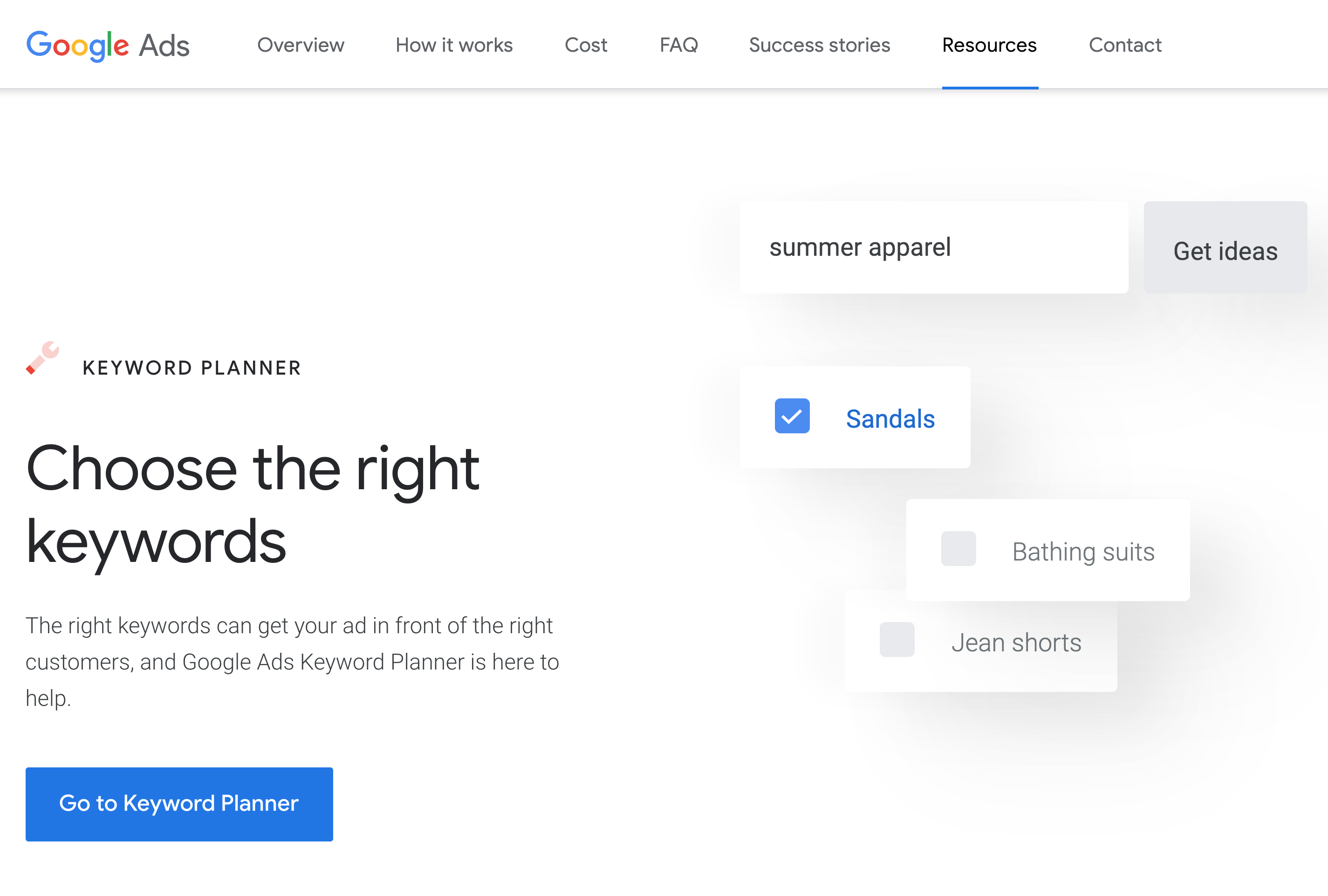
That said:
It’s also a useful tool for search engine marketing keyword research.
(Plus, it’s free to make use of.)
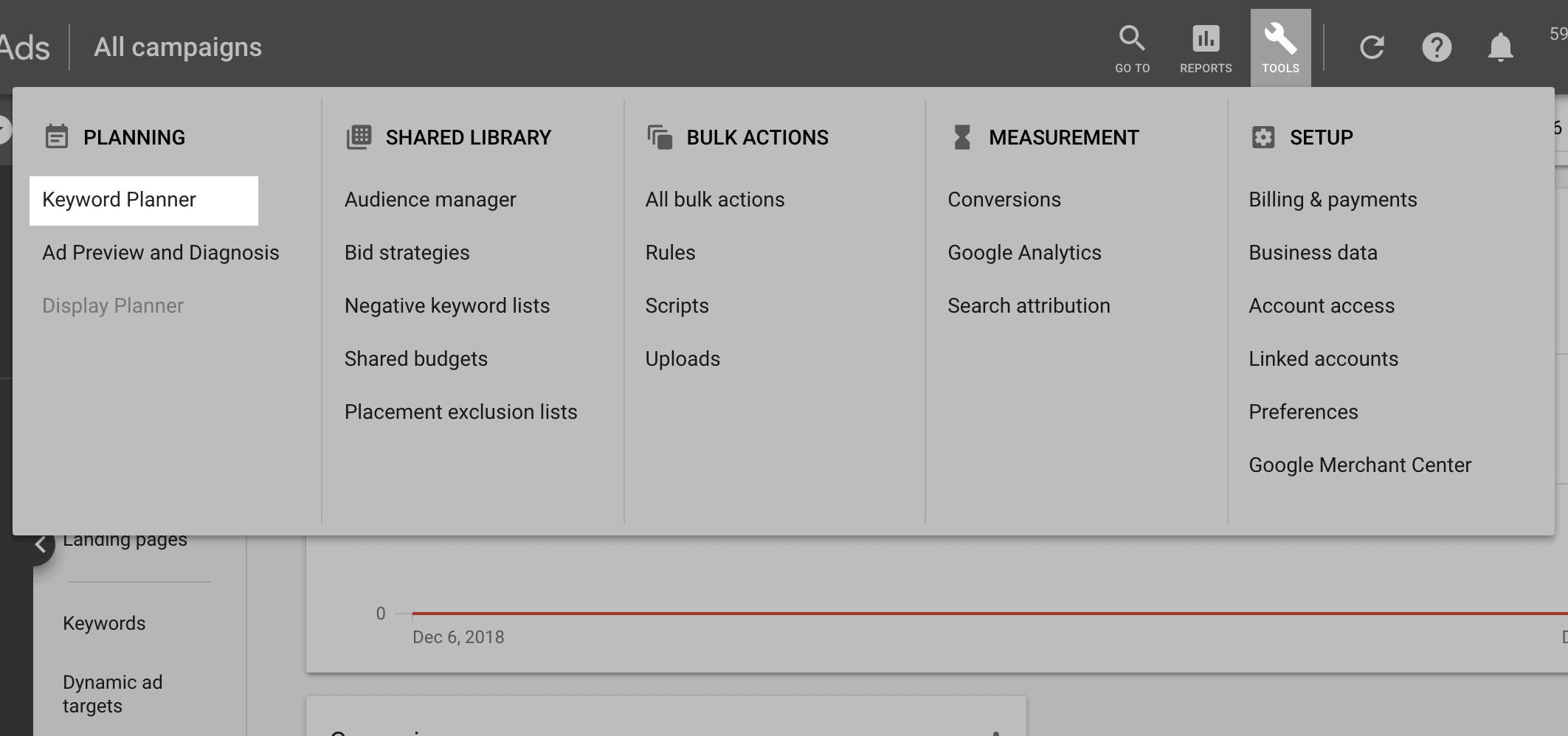
to use it, create a Google Ads account. Then hit the “Google Keyword Planner” button at the top of the page:
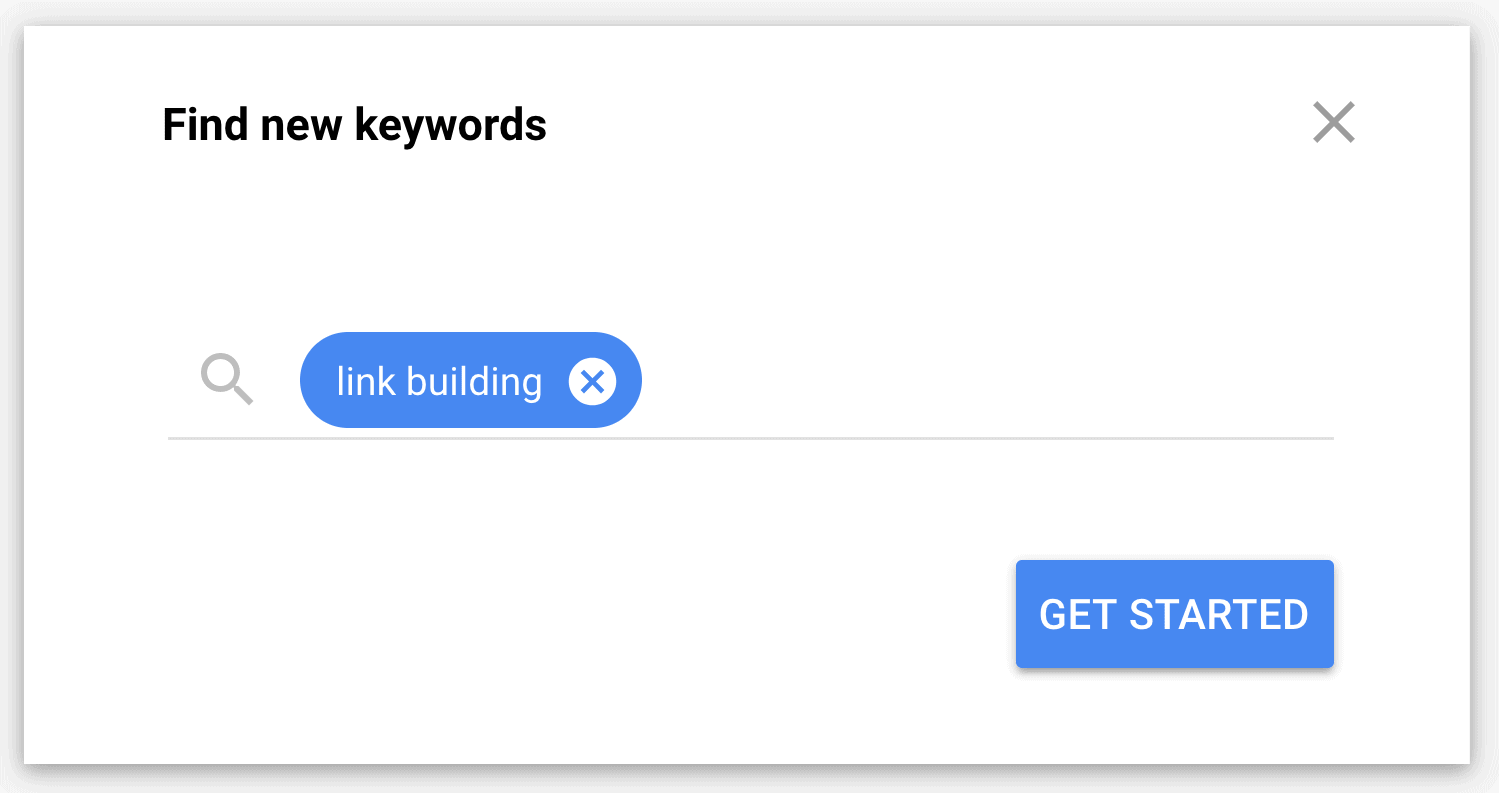
Then, enter a keyword related to your business within the “Find new keywords” field:
And Google will spit out a bunch of related terms:
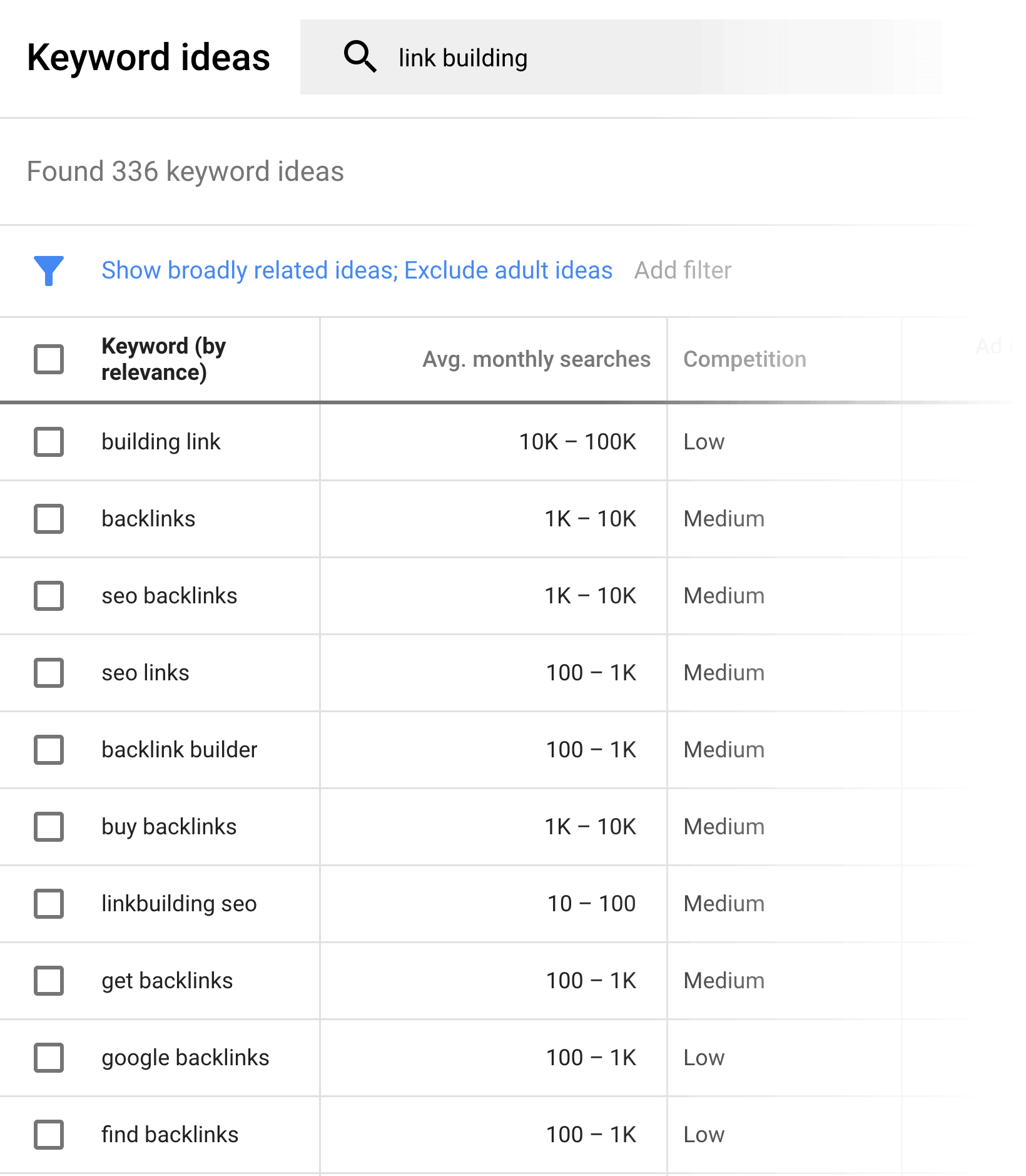
They’ll also come up with a ton of knowledge on each keyword (like “top of page bid”).
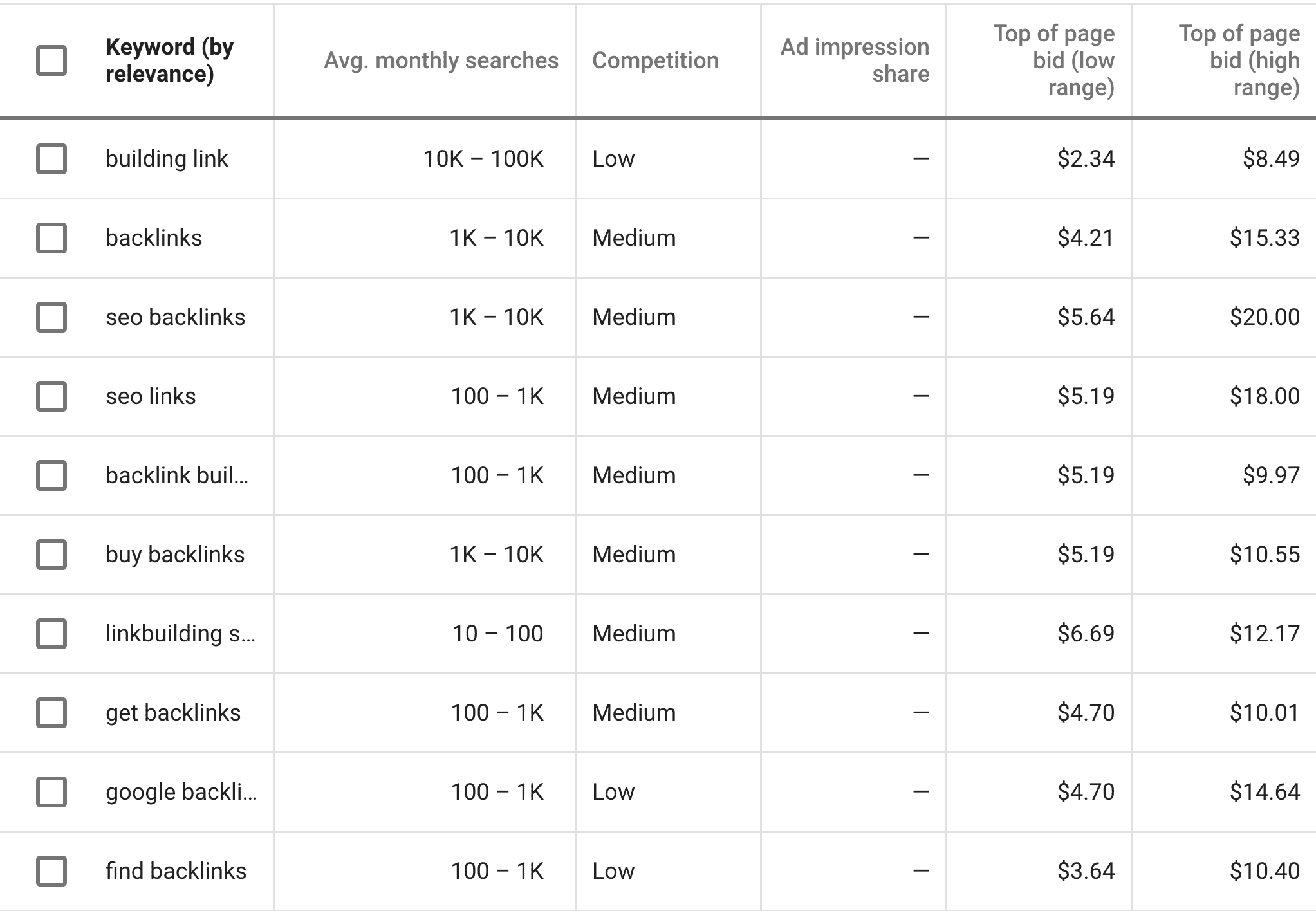
you can ignore all that stuff for now.
at this time, just grasp keywords which might be remotely related to your enterprise. And add them in your Keyword List.
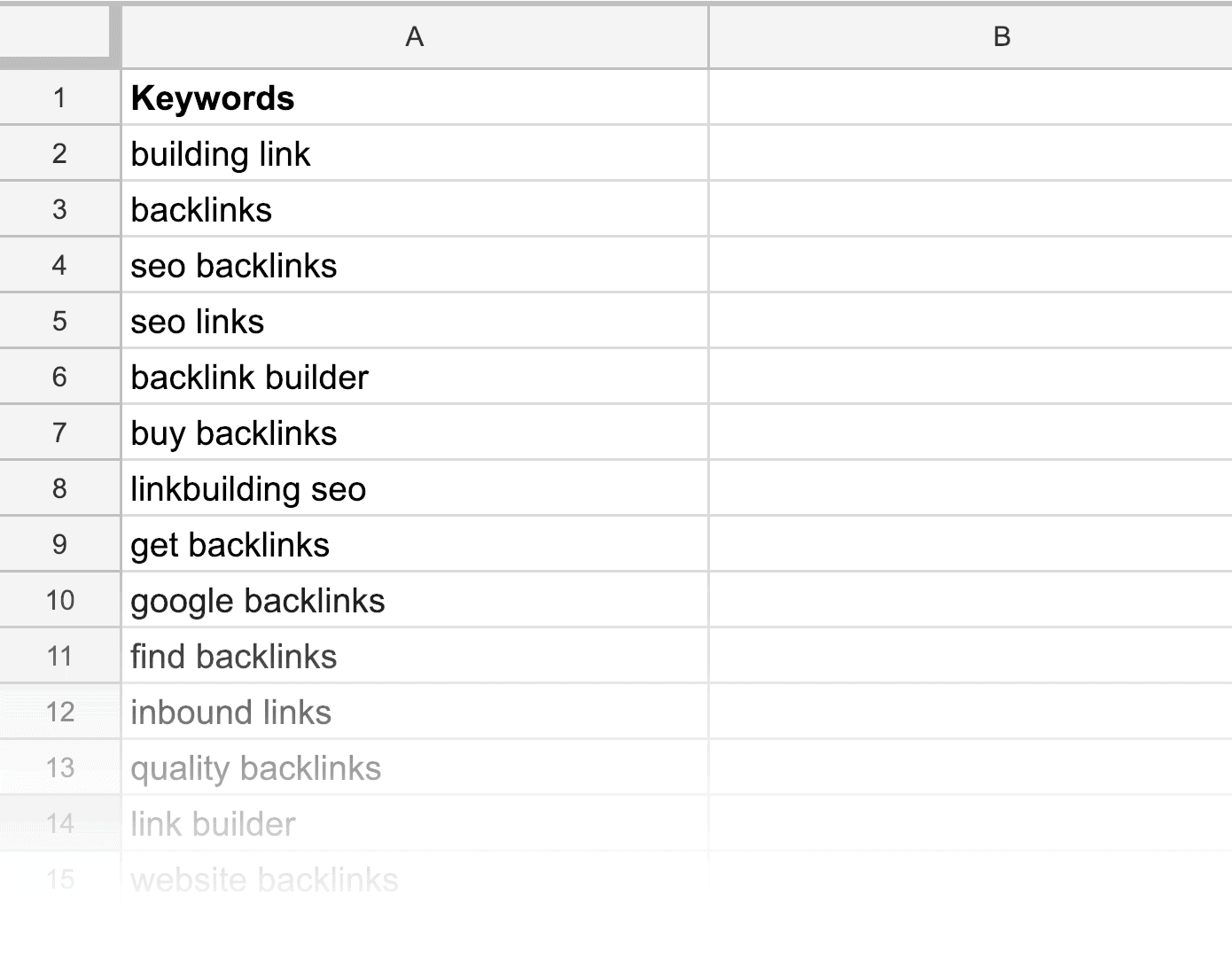
(As you will find, I like to use Google Sheets for my Keyword List. But you need to use Microsoft Excel, Word or anything that works for you.)
Semrush
Semrush is my favorite keyword research tool.
Why?
Because it shows you keywords that your competitors already rank for.
Here’s how it works:
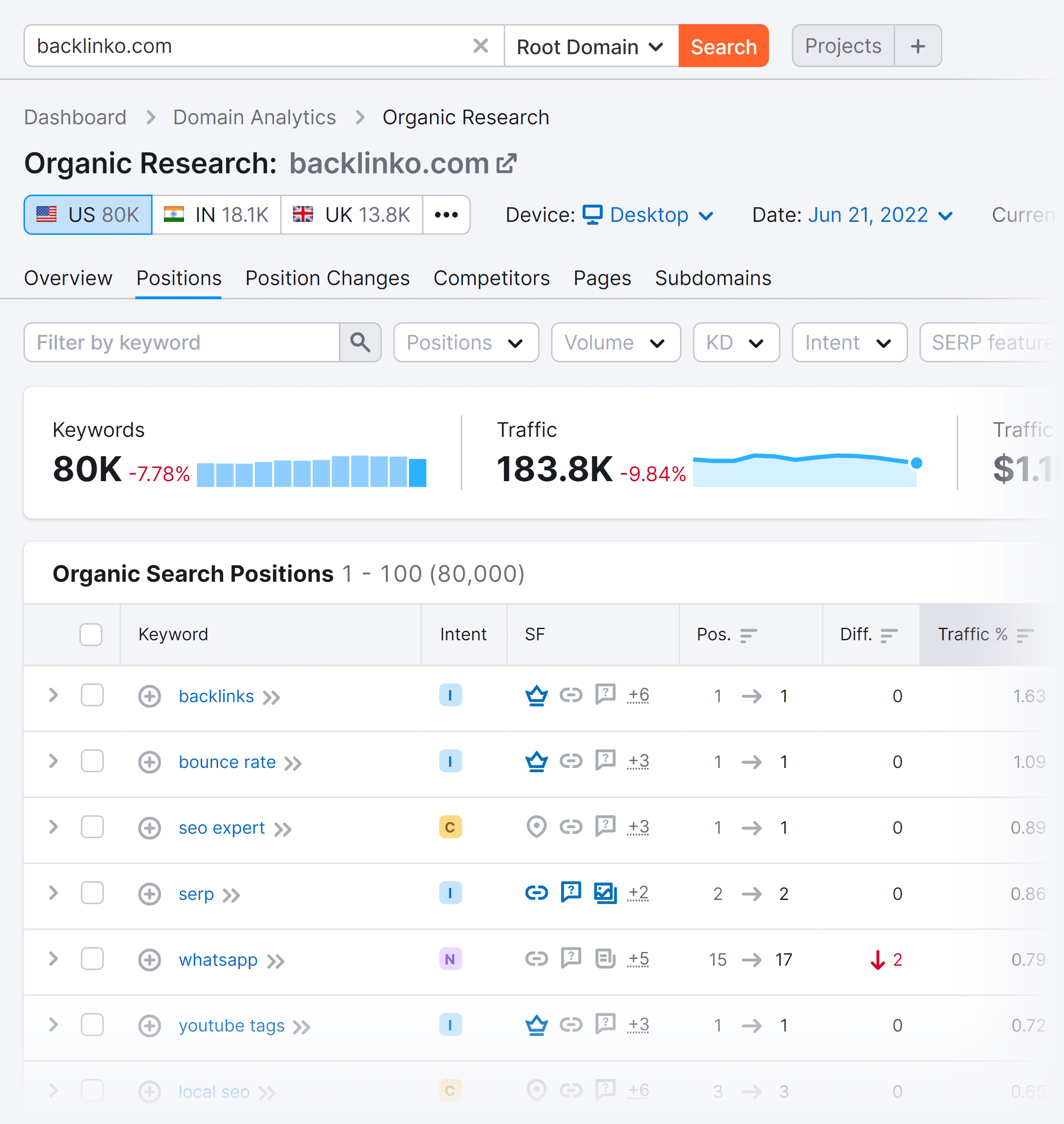
First, type a competing web site into the tool.
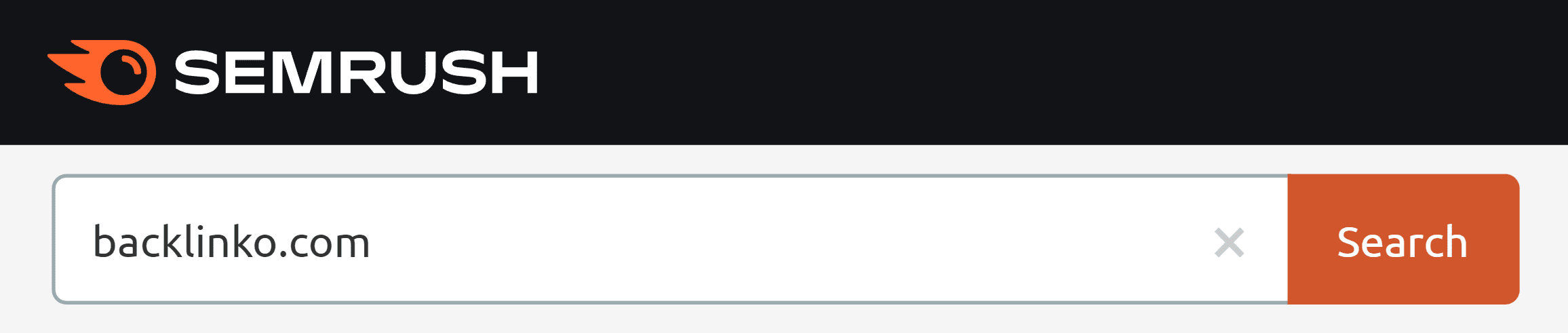
(Pro Tip: pick out a competitor that’s around your size. In the event you put a giant authority website into SEMRush, you’re going to peer keywords which might be WAY too competitive.)
Then, hit Organic Research → Positions to peer the keywords that they rank for in Google:
Google Suggest
Google Suggest is AWESOME for finding long tail keywords.
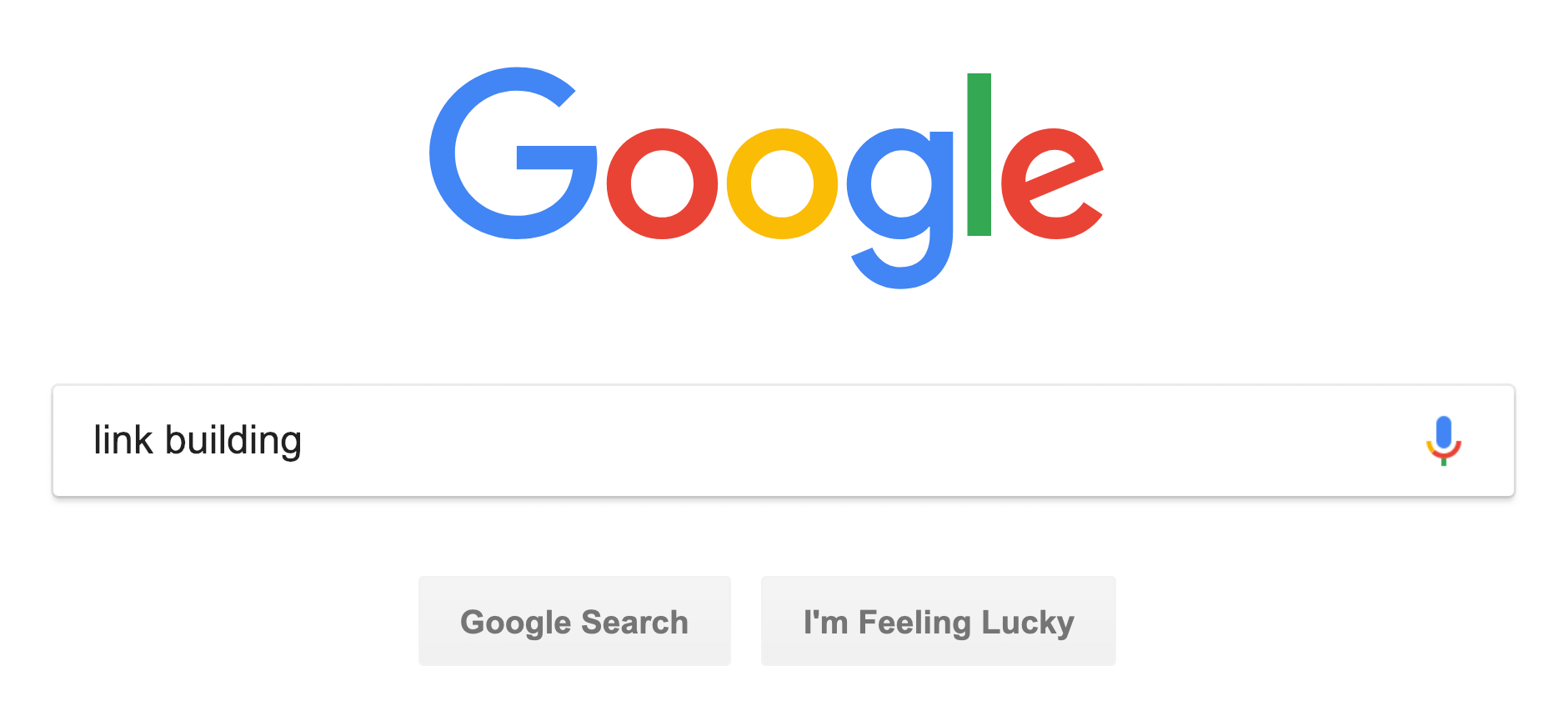
Just enter a keyword that’s related on your business…
…and Google will hand you a list of suggestions.
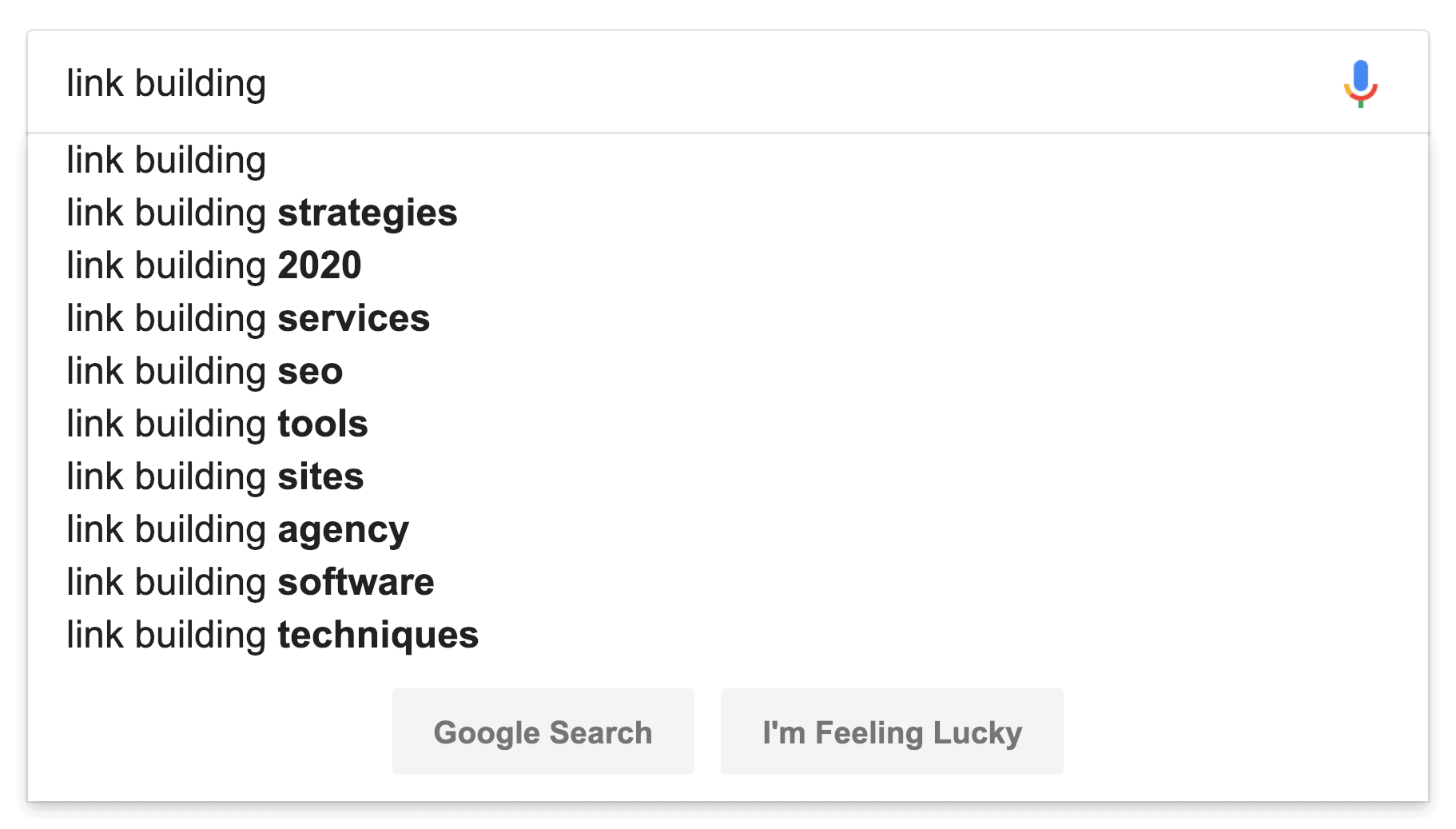
(And these suggestions are in line with what persons are on the lookout for at this time. That way, you recognize they’re popular.)
Seed Keywords
SeedKeywords.com is a VERY cool free keyword research tool.

The cool thing about Seed Keywords is that it helps you find terms that folks use to find what your website sells.
(Which removes numerous guesswork from the keyword research process.)
to make use of it, create a “Scenario”.

A Scenario is where you ask folks how they'd seek for your services or products on Google:

Then, send your Scenario to other people.

And see what terms they used:
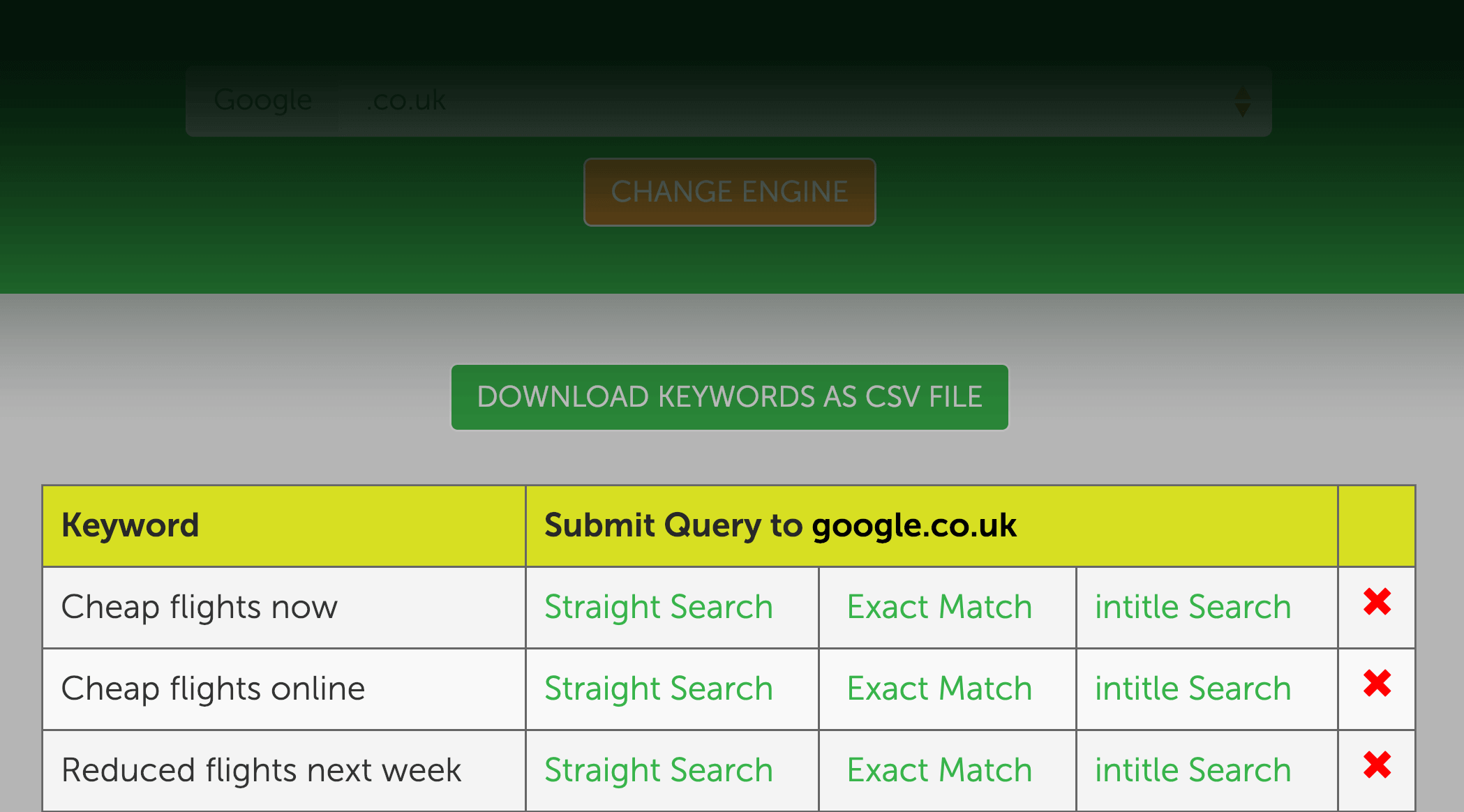
If you’re like me, you’ll find some gems that are just about inconceivable to find some other way.
Side note: “Seed Keywords” are terms that you simply put into a keyword research tool. Most of the people pick seed keywords out of thin air. Or they use Seed Keywords that they believe folks use in Google. This tool is super helpful because it helps you find seed keywords that individuals in fact use to search.
Semrush Keyword Magic Tool
Keyword Magic Tool is a part of the Semrush’s suite of SEO tools.
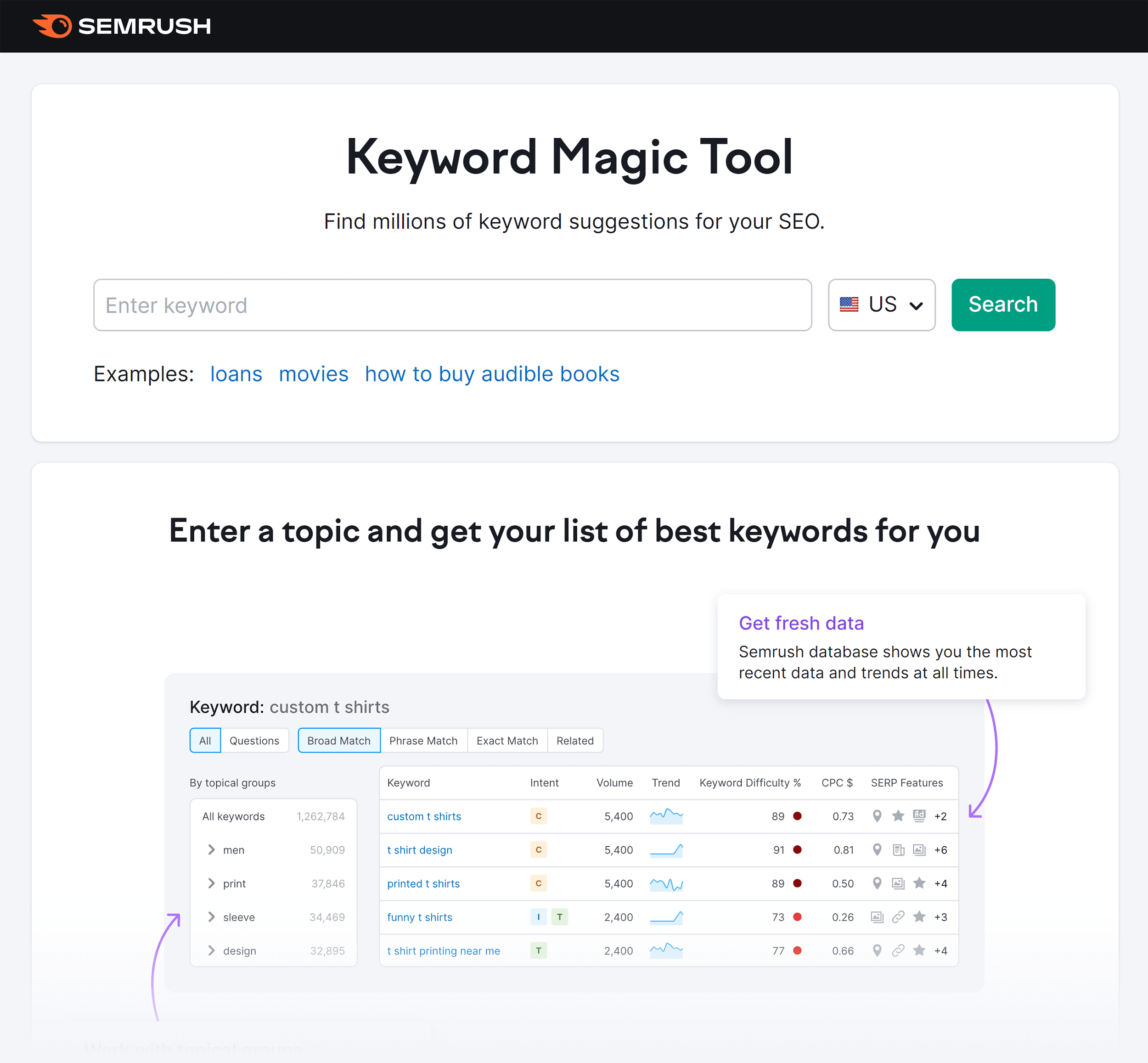
Like most keyword tools, it generates suggestions in accordance with your seed keyword.
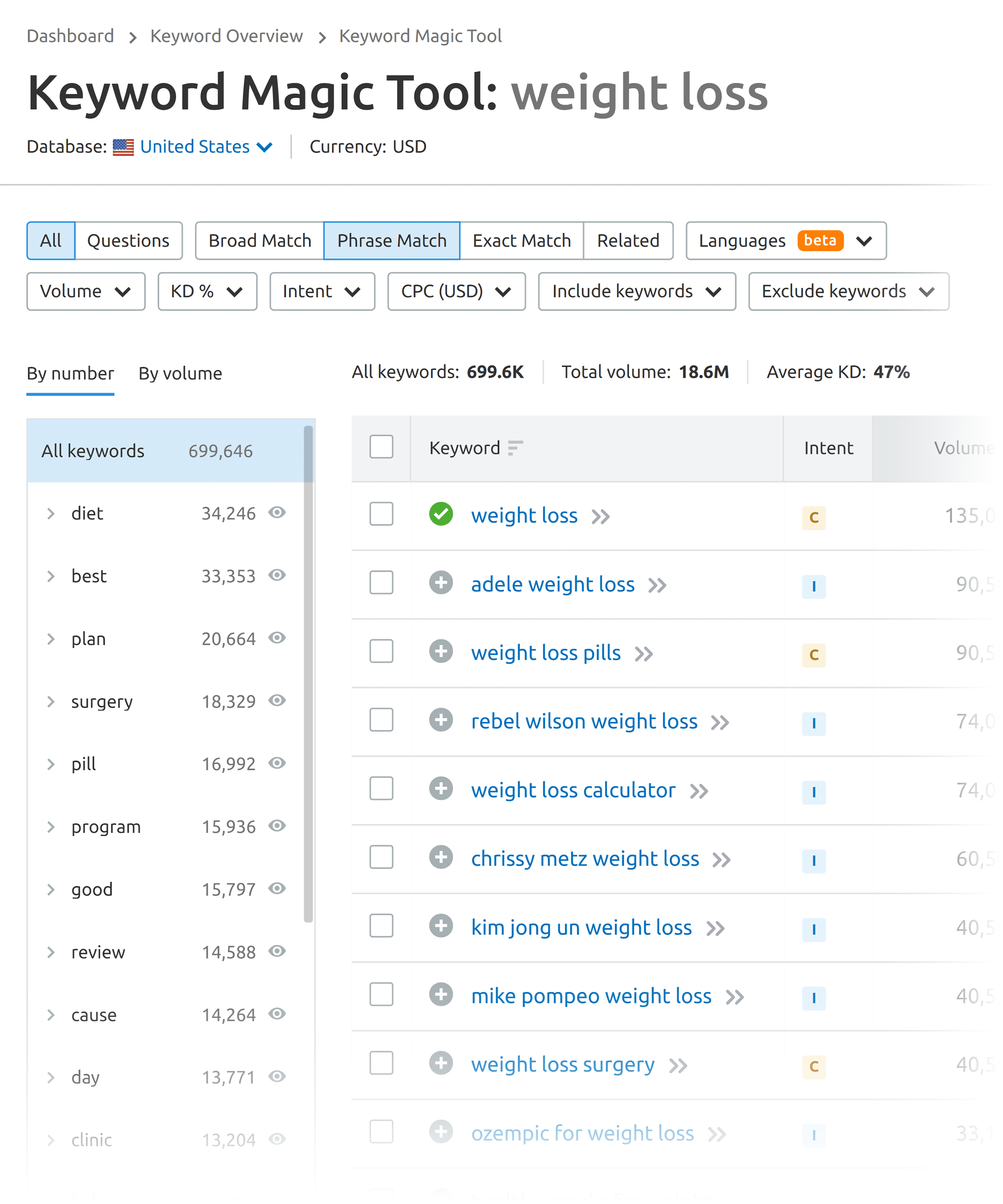
What sets Semrush apart is that it gives you an insane amount of data on each keyword.
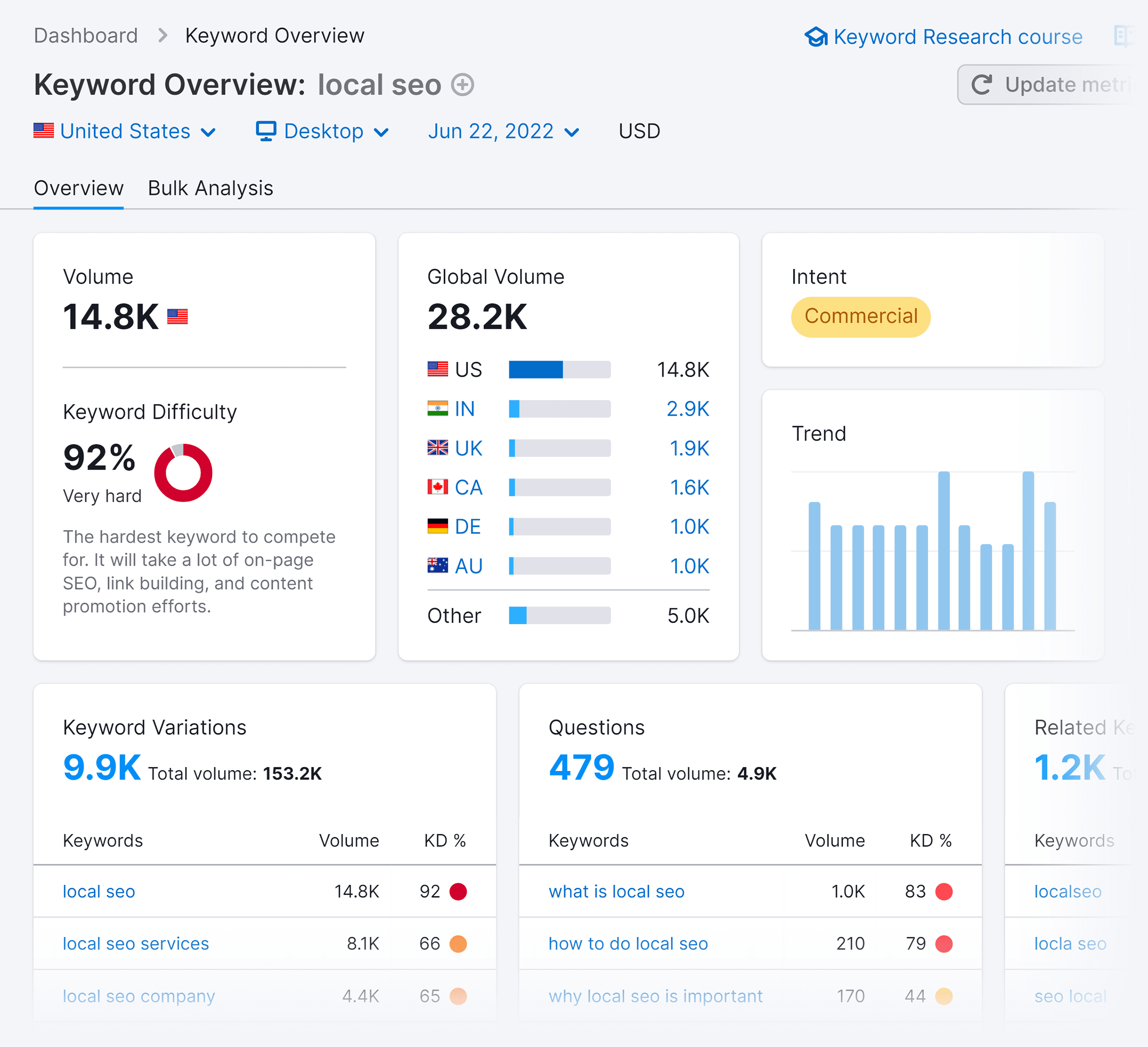
Which makes selecting the proper keywords so much easier.
(More on that later.)
This leads us to our second step…
Step #2: Find Low-Competition Terms
Now it’s time to size up the contest.
Specifically, you must identify the keywords for your list that aren’t super competitive.
Here’s how:
MozBar for Chrome
This free tool shows you keyword competition inside of the search results.
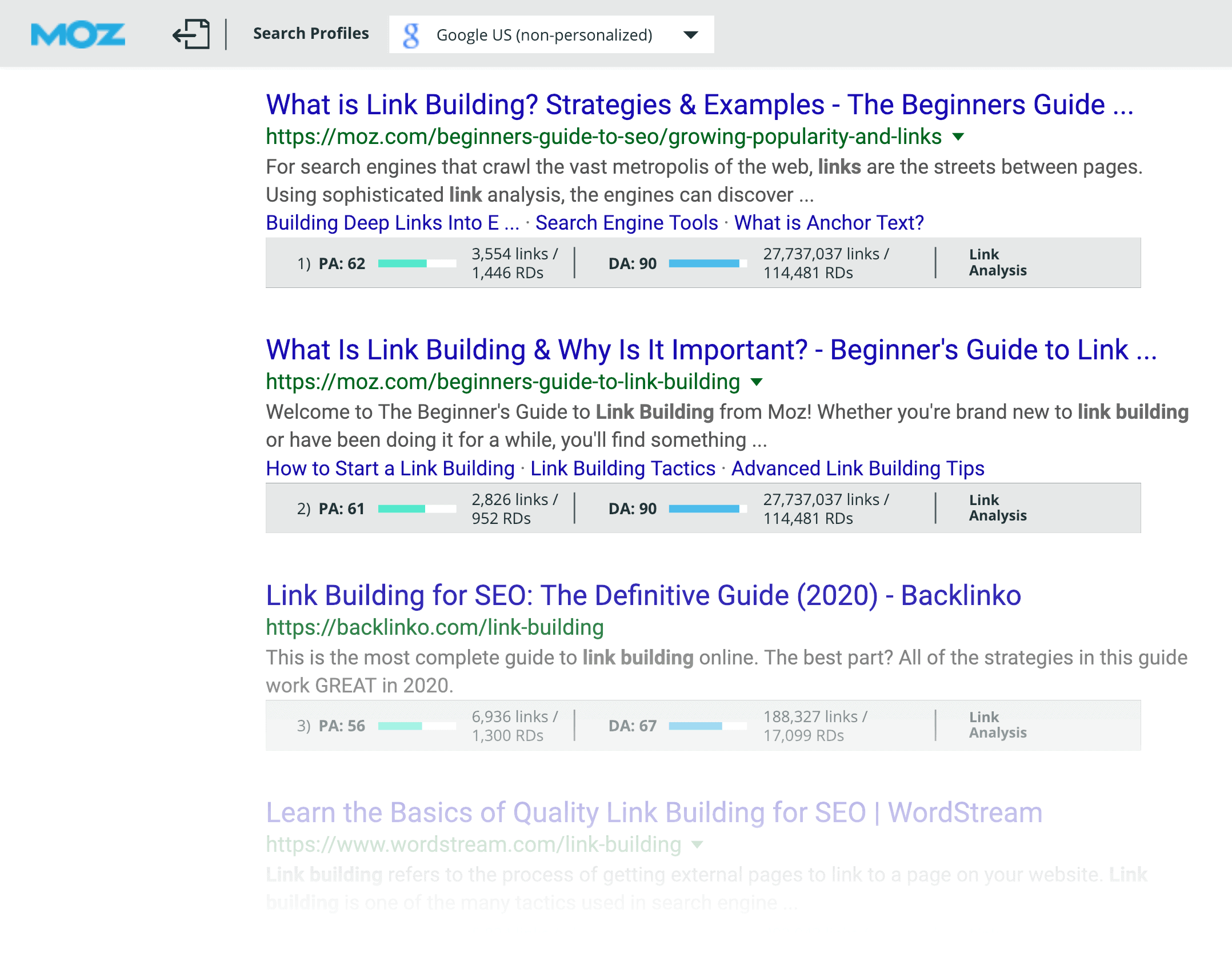
Specifically, it shows you a page’s Page Authority (the quality and quality of links pointing to that individual page):
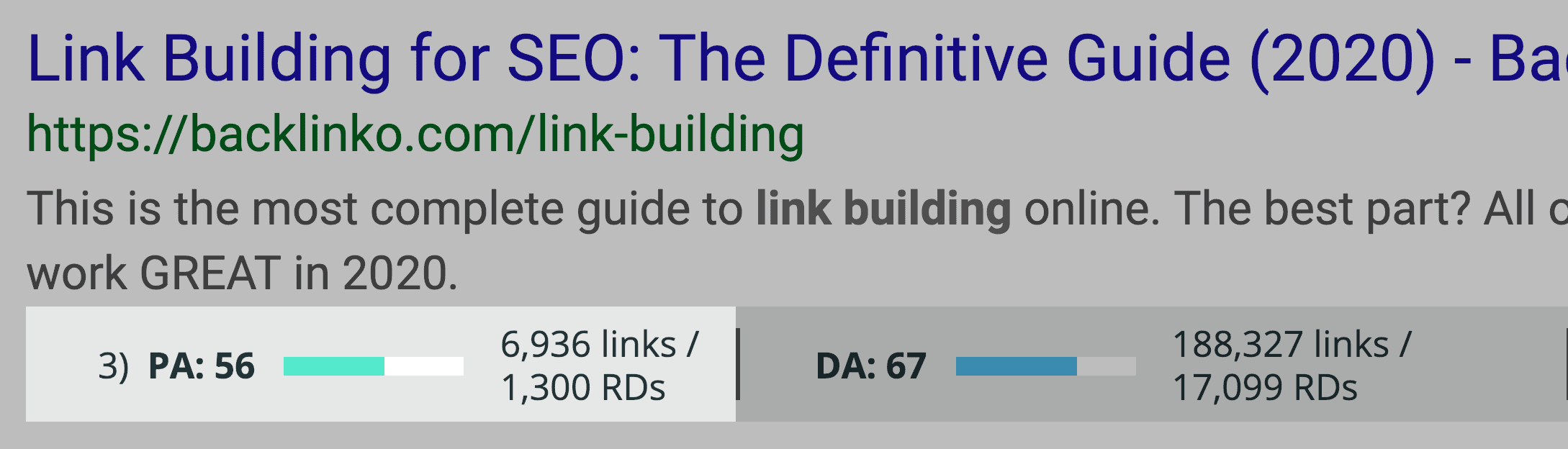
The MozBar also shows you a site’s Domain Authority (an estimate of the site’s overall authority within the eyes of Google)
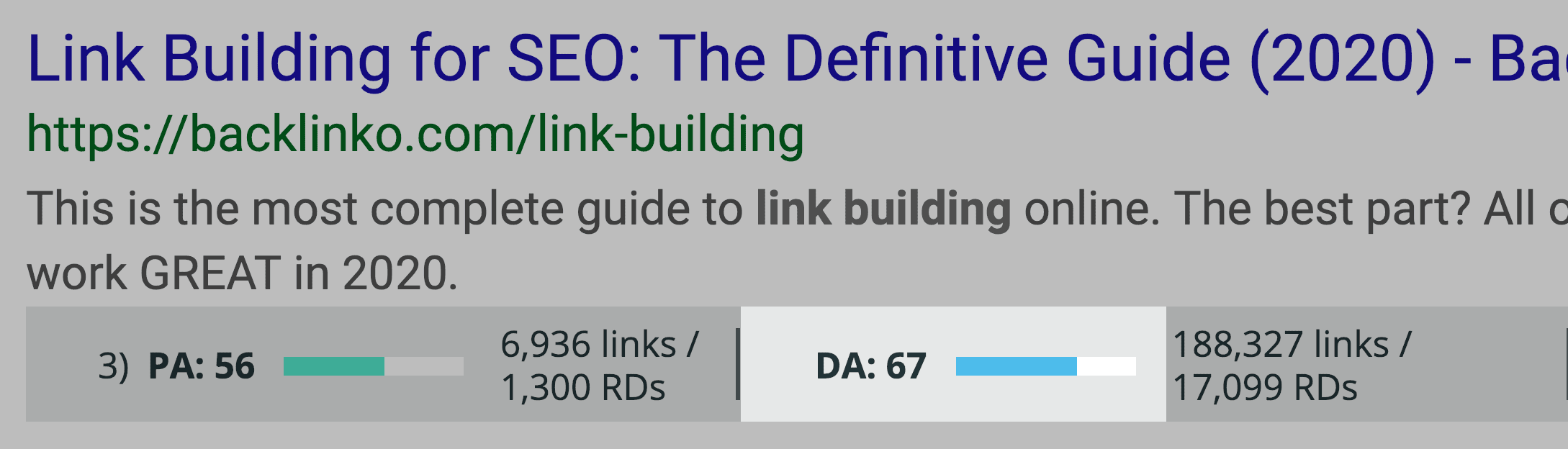
There’s no minimum PA or DA to search for. It varies so much depending on the niche.
Fortunately, after a couple of searches, you’ll get an idea of what’s “low competition” to your industry.
But generally, the lower the DA and PA, the better.
Keyword Difficulty Scores
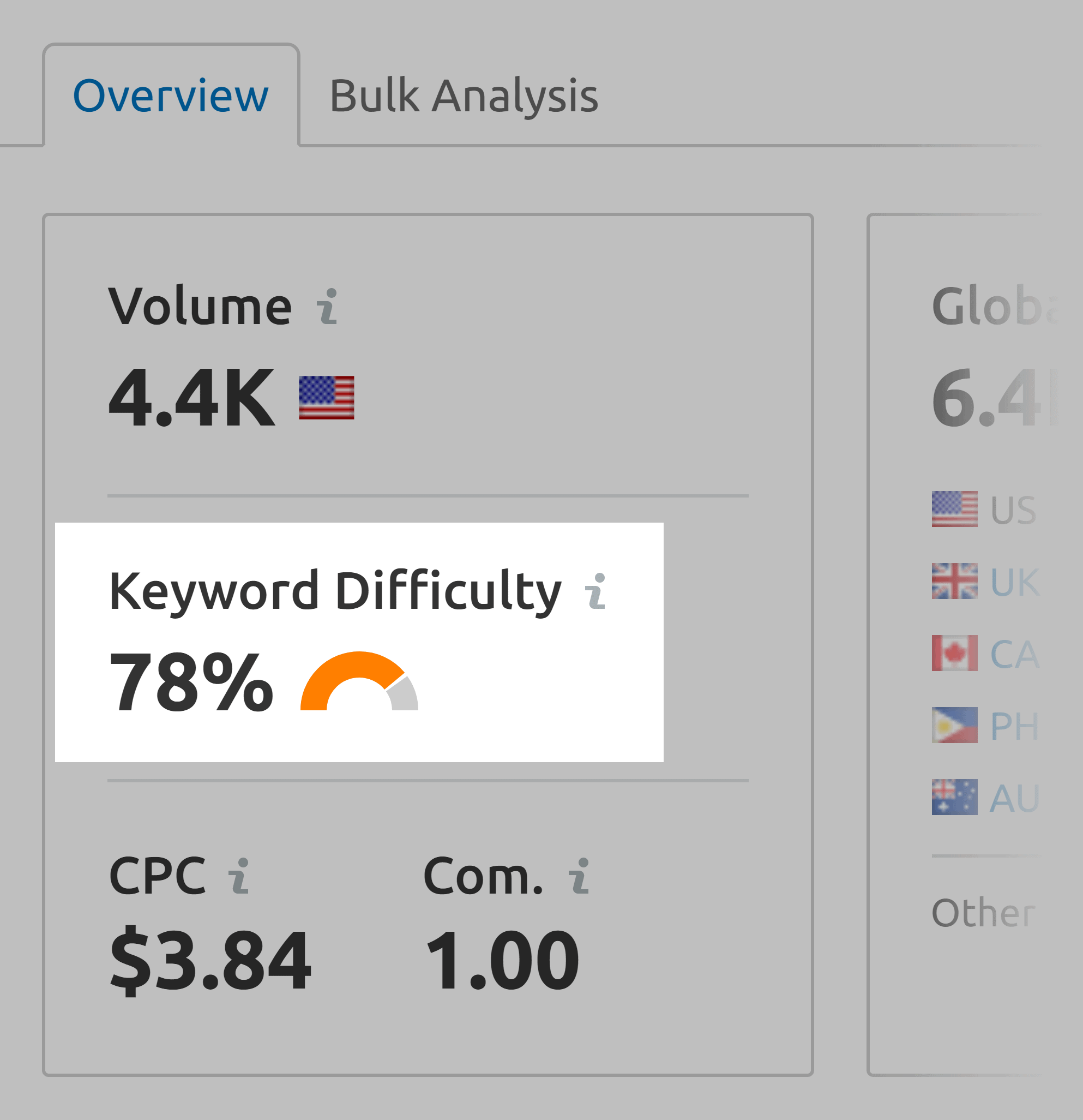
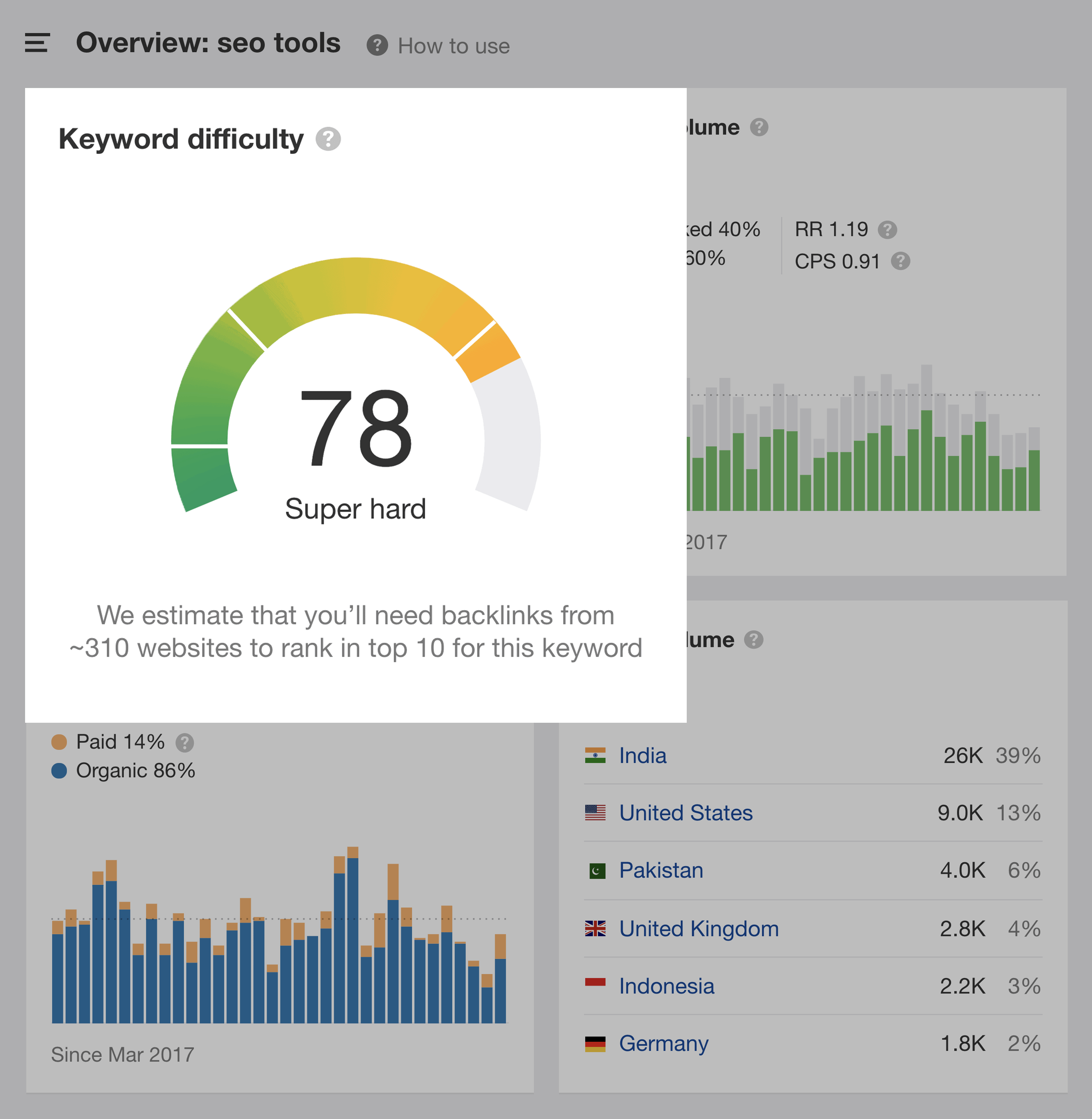
Most keyword research tools have an overall “Keyword Difficulty Score”.
for instance, Semrush has “Keyword Difficulty”:
Same as Ahrefs:
And KWFinder uses something called “Keyword SEO Difficulty”
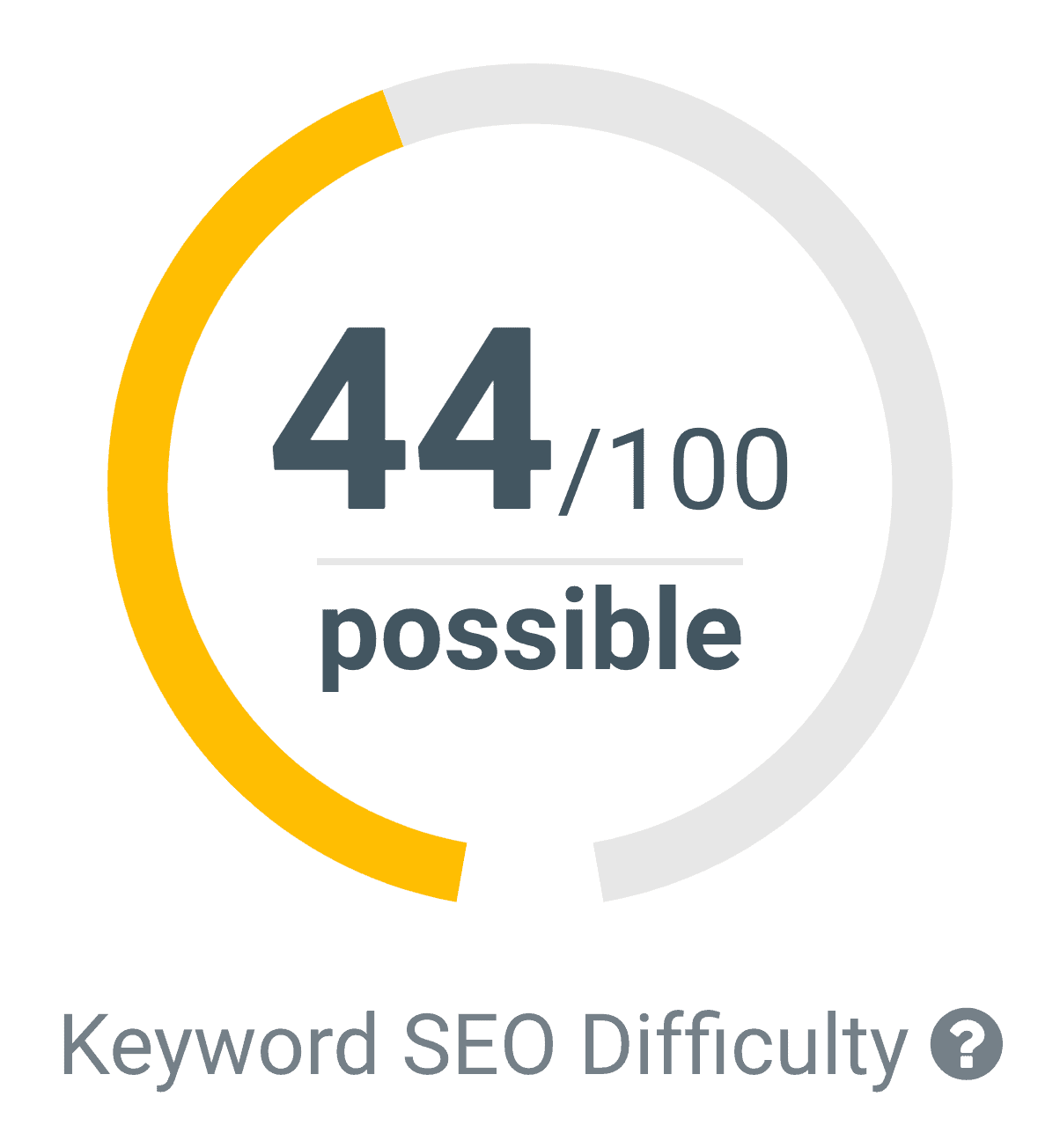
the one downside of using a Keyword Difficulty Score is that it bases competition a hundred percent on back-links.
Yes, inbound links are a really perfect essential search engine ranking factor. But they’re just one piece of the puzzle.
Google also looks at how well a page is optimized for that term, whether the content is a superb fit for what the searcher wants… and hundreds of alternative factors.
In short:
Keyword Difficulty Scores give a general sense of a keyword’s competition level. But they’re no longer one hundred percent accurate.
Step #3: Identify Search Volume
Next, you would like to see what number of people seek for the keywords on your list.
(aka “Monthly Search Volume”.)
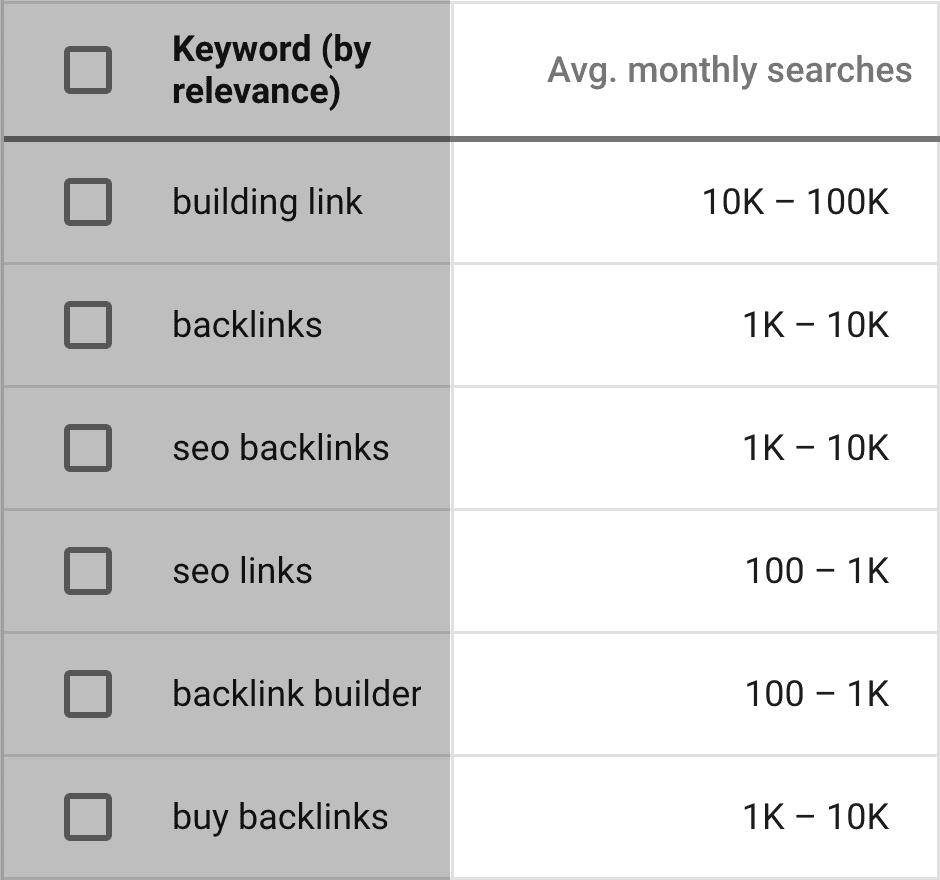
you will get this data from inside the Google Keyword Planner.
(They call search volume “Avg. Per month Searches”.)
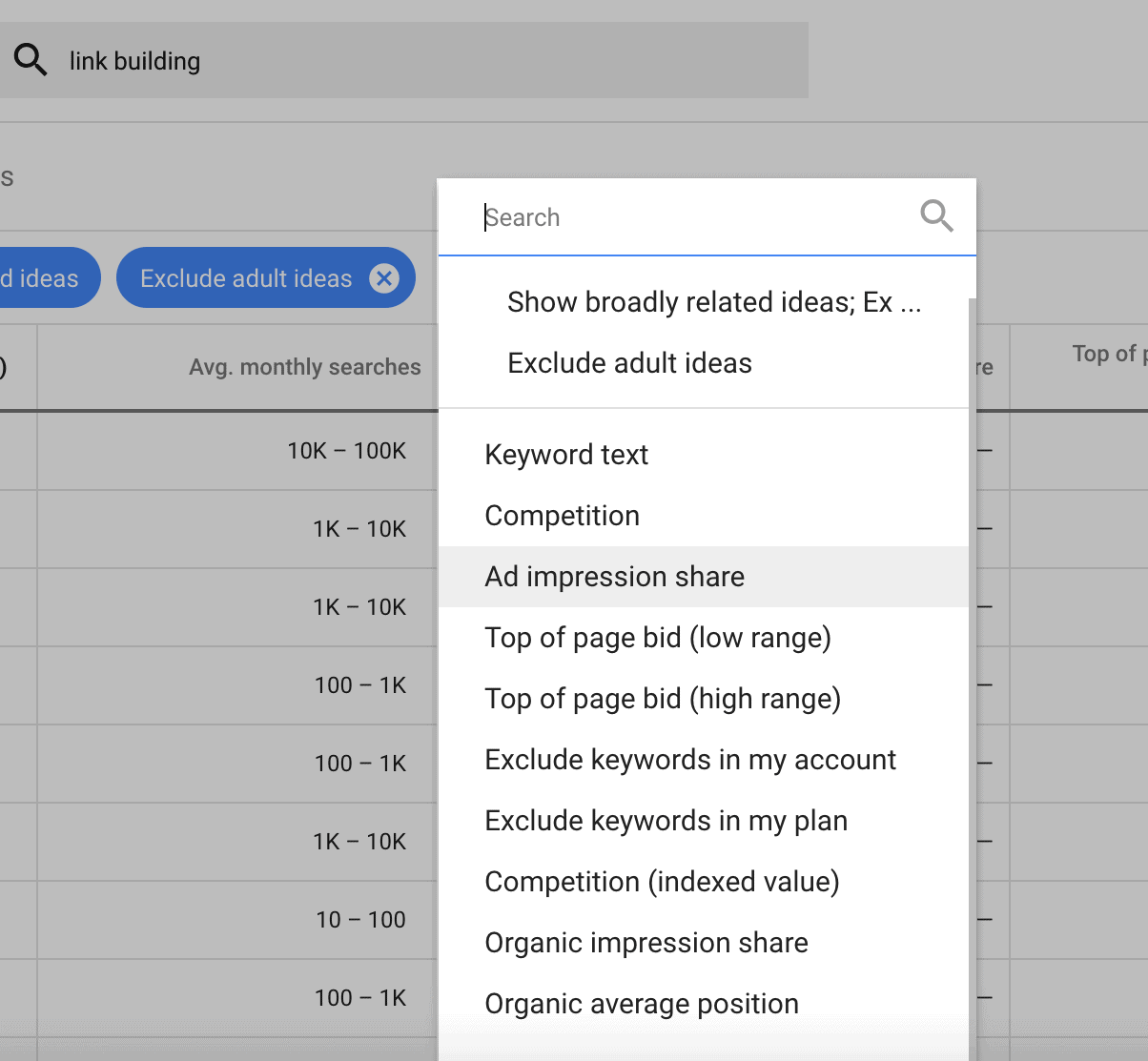
it's also possible to filter the results so it only shows keywords above or below a certain level of competition or CPC.
With all that:
even supposing this information comes straight from Google, the number is an estimated range… not an exact amount.
as an example, in the event you look at a keyword like “SEO Tools”, the GKP says that 1k to 10k other folks search for it each month:
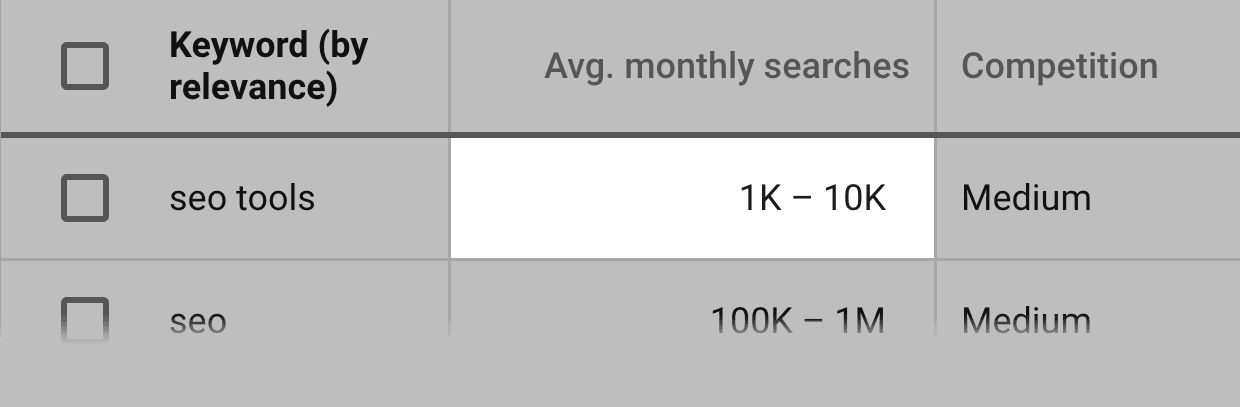
Well, I occur to rank in the top 3 for that term. And i will be able to inform you that the true number is more like 39k:
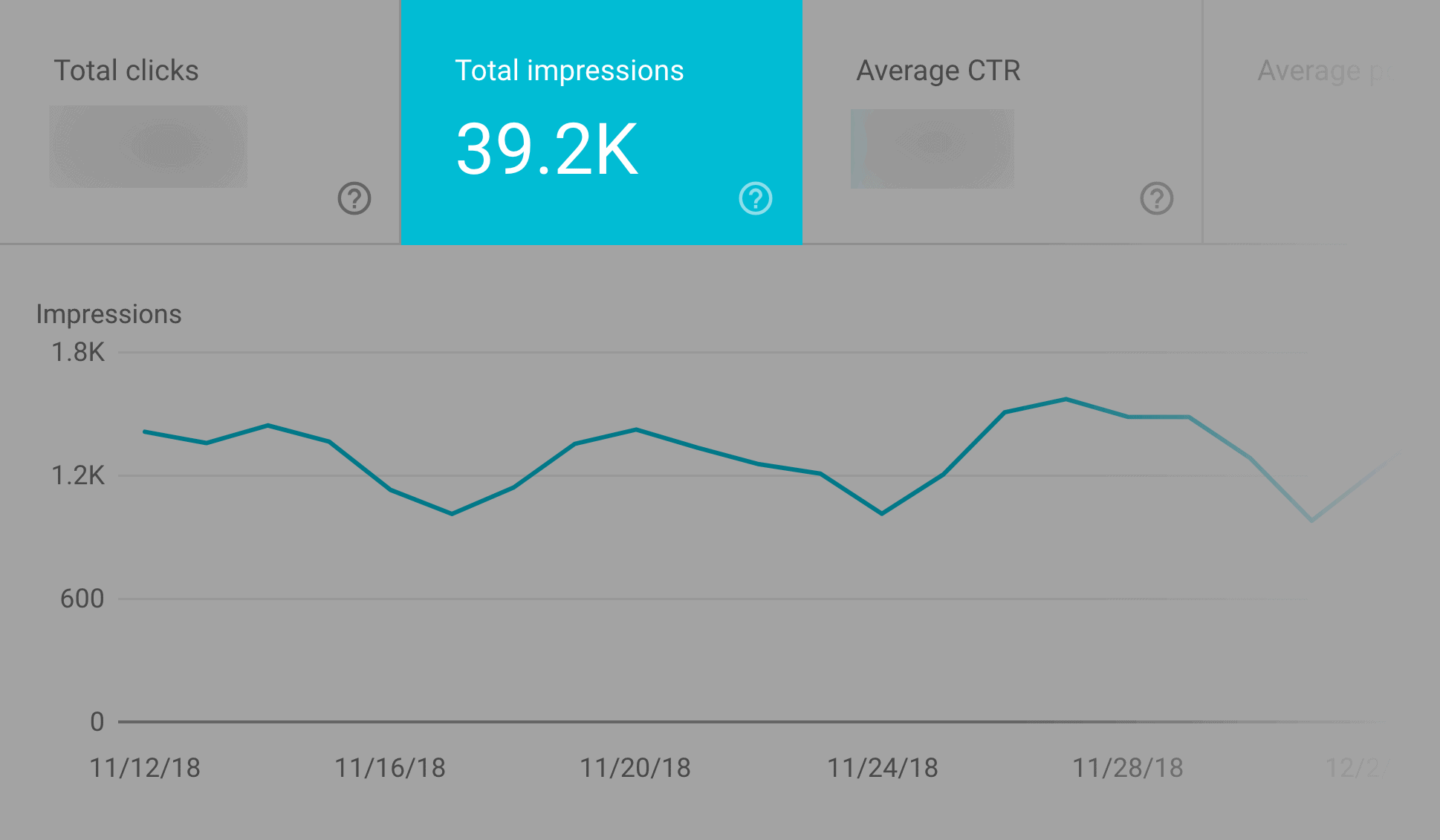
Also, most keyword tools (including Semrush) pull search volume data from the GKP.
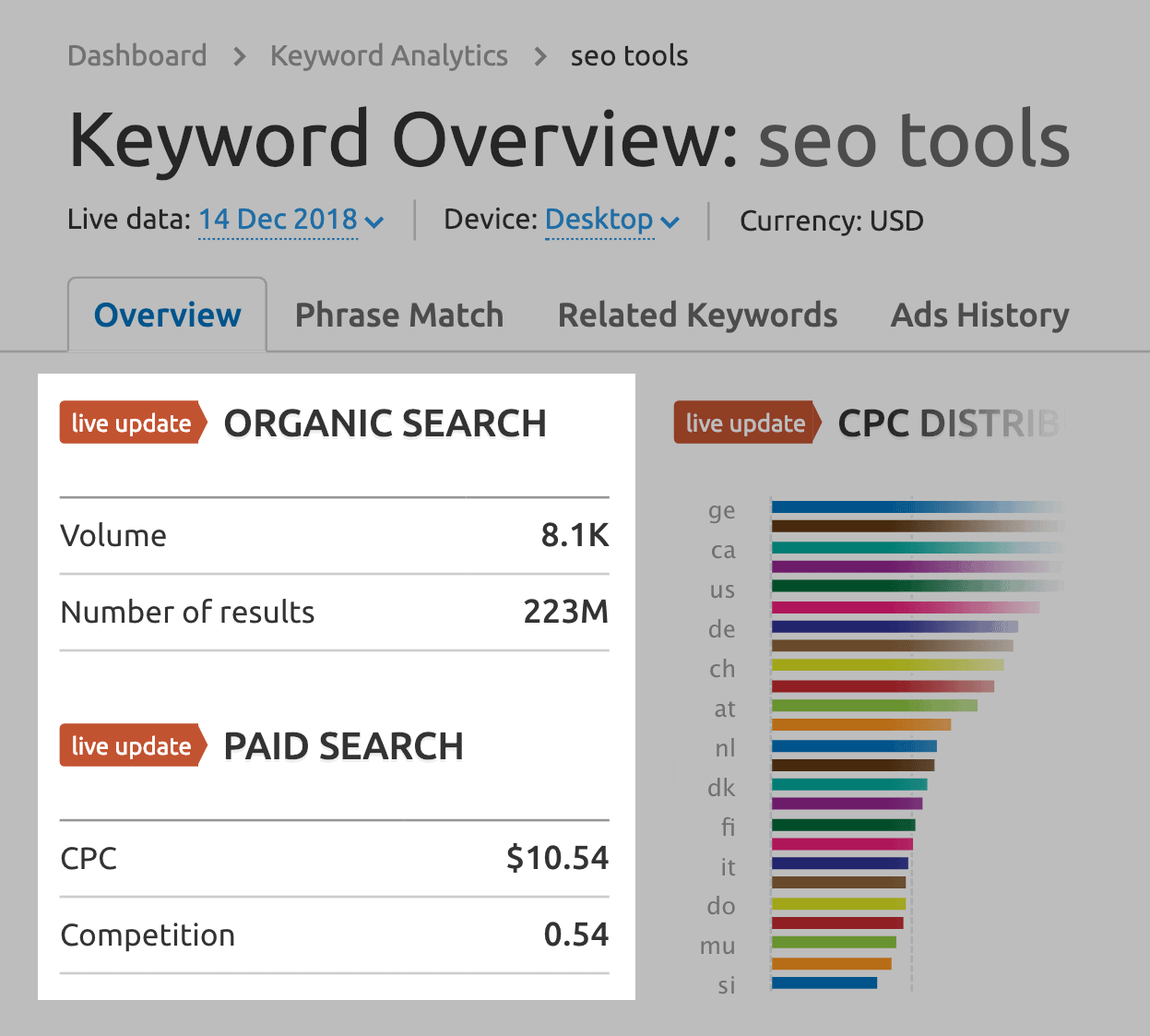
But there are two tools that estimate monthly searches the usage of their very own internal data…
Moz and Ahrefs Clickstream Data
Moz Pro and Ahrefs both use “Clickstream” data to determine search volume.
In other words:
They DON’T pull search volumes from the GKP. As a substitute, they estimate search volume in accordance with actual user behavior.
for example, let’s look again at the term “SEO Tools”.
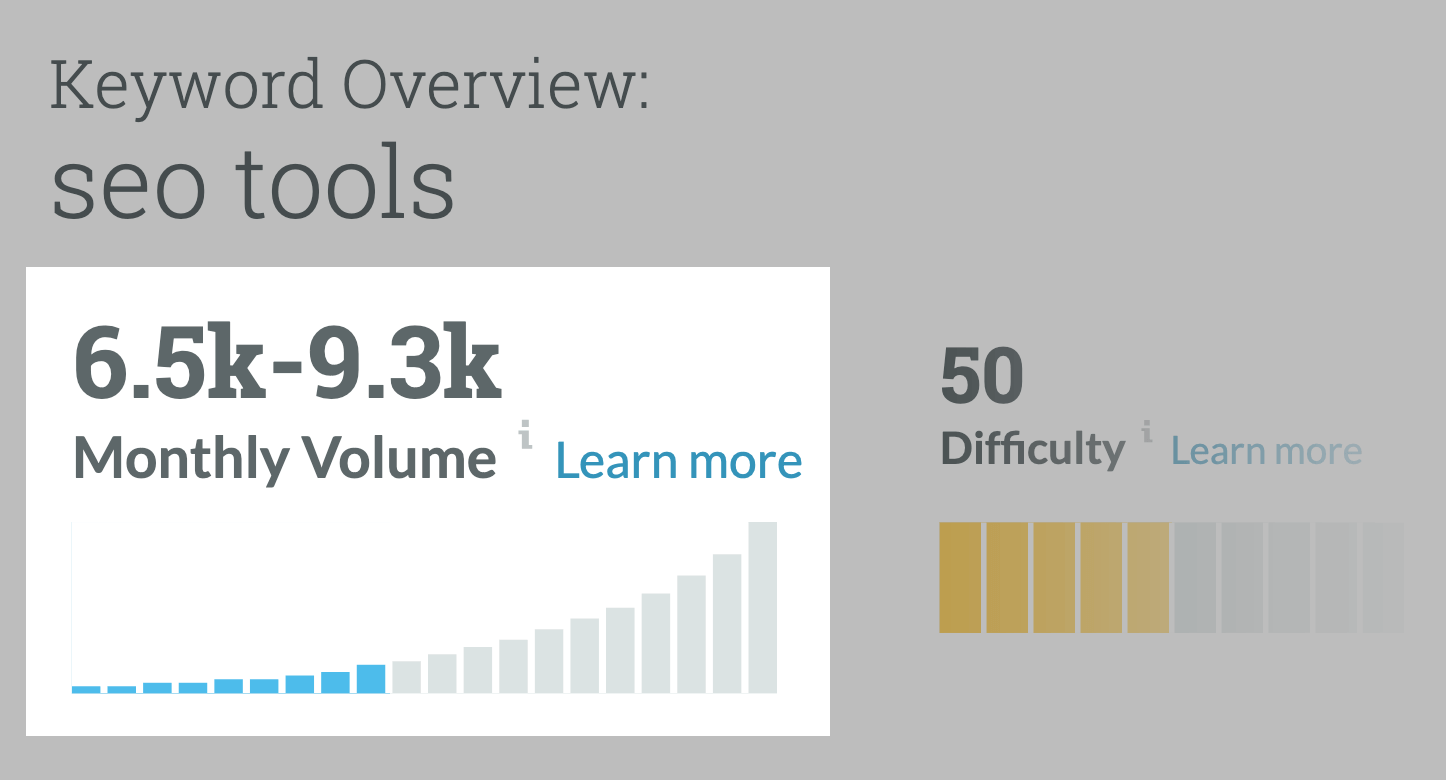
Moz gives a range of “6.5k-9.3k” searches per month:
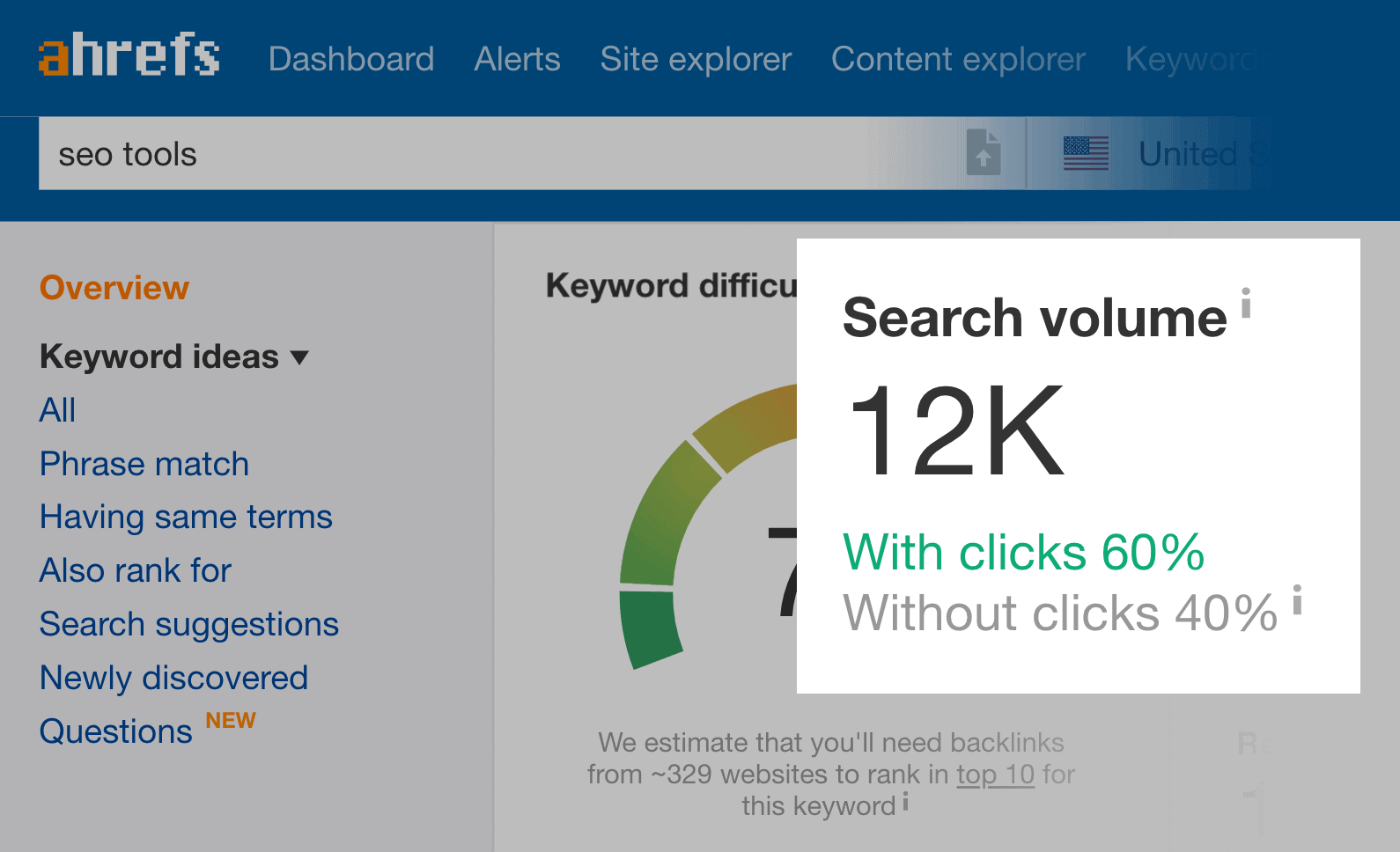
Ahrefs estimates the search volume as 12k per month:
I wouldn’t go crazy comparing search volumes from different sources.
It’s just to show you that different tools have different ways of estimating search volume.
the only query left is:
how many searches does a keyword intend to make it worth optimizing for?
Short answer: it depends.
Long answer:
There’s no minimum search volume for everybody. Each and every industry is completely different.
for instance, in my niche (B2B) a keyword with a search volume of 25k/month is in point of fact high.
But in a B2C space like fitness, 25k is nothing.
So I recommend opting for a keyword that has relatively strong search volume to your industry.
Then, move on to step #4…
Step #4: Assess Earning Potential
It’s one thing for a keyword to have loads of searches and low competition.
however the more necessary query is:
Will that keyword make you money?
Here are two ways to figure that out:
“Top of Page Bid”
that is Google’s estimate of how much an advertiser normally spends for a single click.
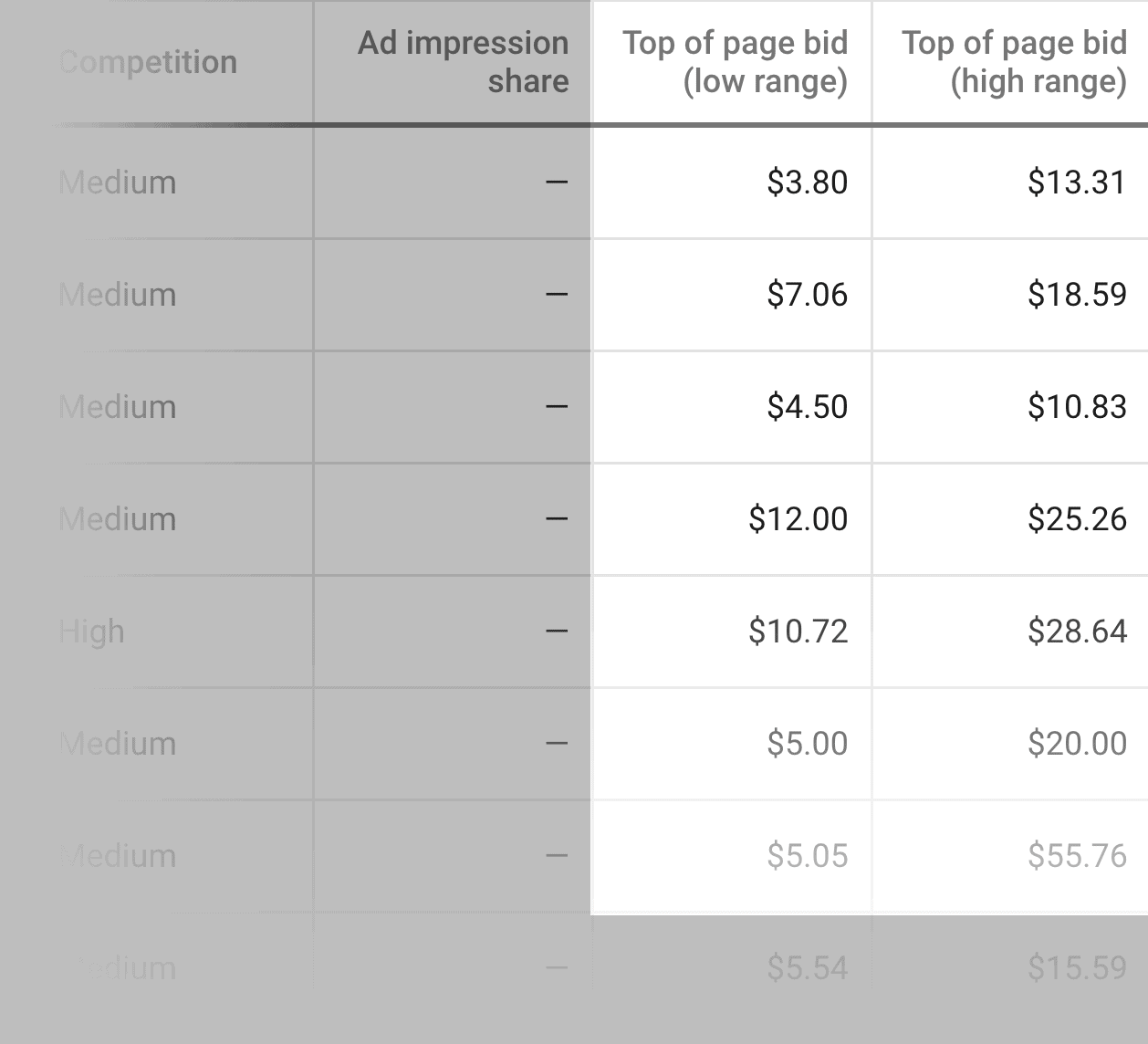
It’s called “Top of page bid” because it’s how much it costs to place your ad (and get a click) at the top of Google’s first page.
the upper the “Top of page bid”, the more a keyword is worth.
(Also known as “Commercial Intent”.)
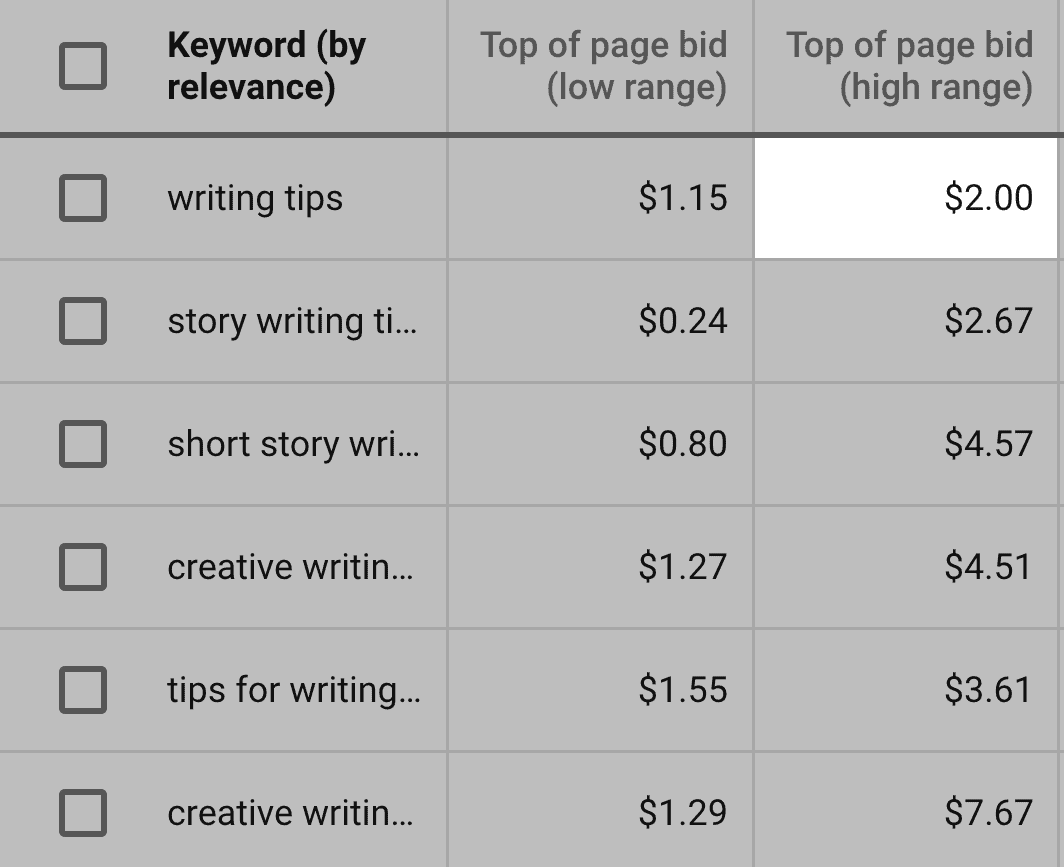
for example, an informational keyword like “writing tips” has an estimated bid of $2:
alternatively, a keyword with strong buyer intent, like “WordPress hosting” has an estimated bid of $37.41:
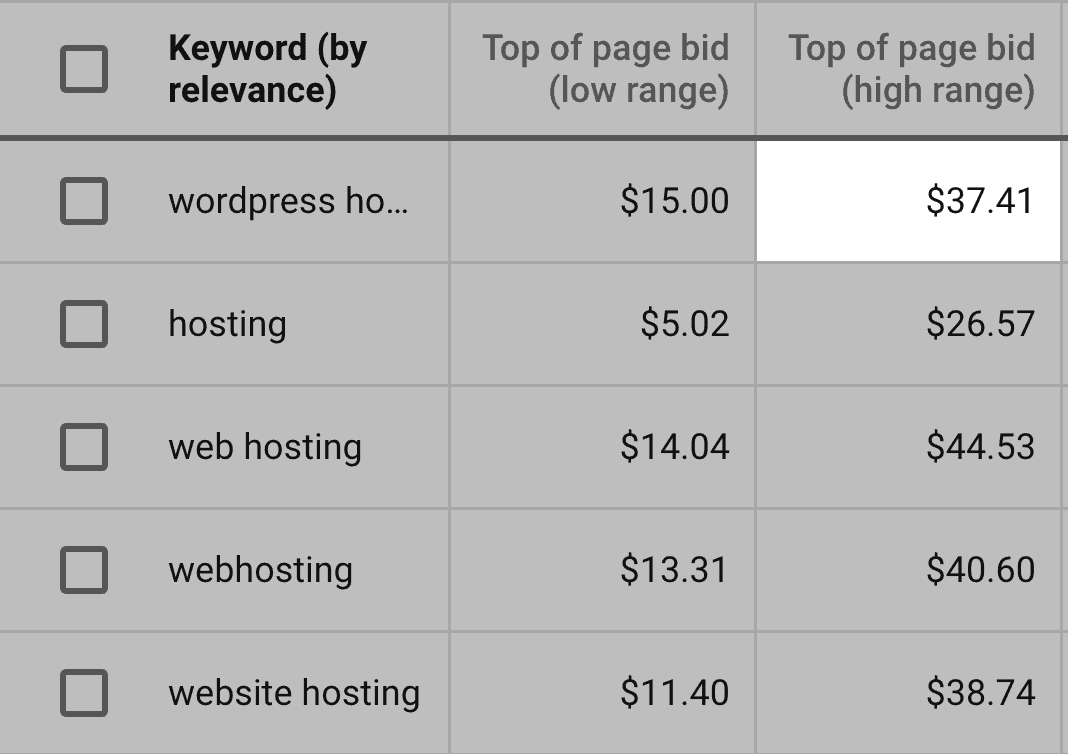
(That’s 18x more than “writing tips”.)
I’m now not saying that you must target keywords with a $20+ cost per click.
as an alternative, use commercial intent (along with search volume, competition, etc.) to search out best possible keywords for you.
Product-Keyword Fit
the second element of earning potential is named “Product-Keyword Fit”.
In other words:
Does this keyword have anything to do with what you sell?
Obviously, the closer the keyword is to your product or service, the easier that searcher is going to convert.
That said:
You don’t always need to target keywords which might be related to what you sell.
For example:
My web site, Backlinko, is an search engine optimization training company.
But I don’t ONLY target keywords like: “SEO training” or “online marketing courses”.
as an alternative, I most commonly target keywords that my customers seek for when they’re no longer looking for what I sell.
And I create SEO-optimized content around those terms.
as an example, I rank in the top 5 for the keyword “SEO audit”:
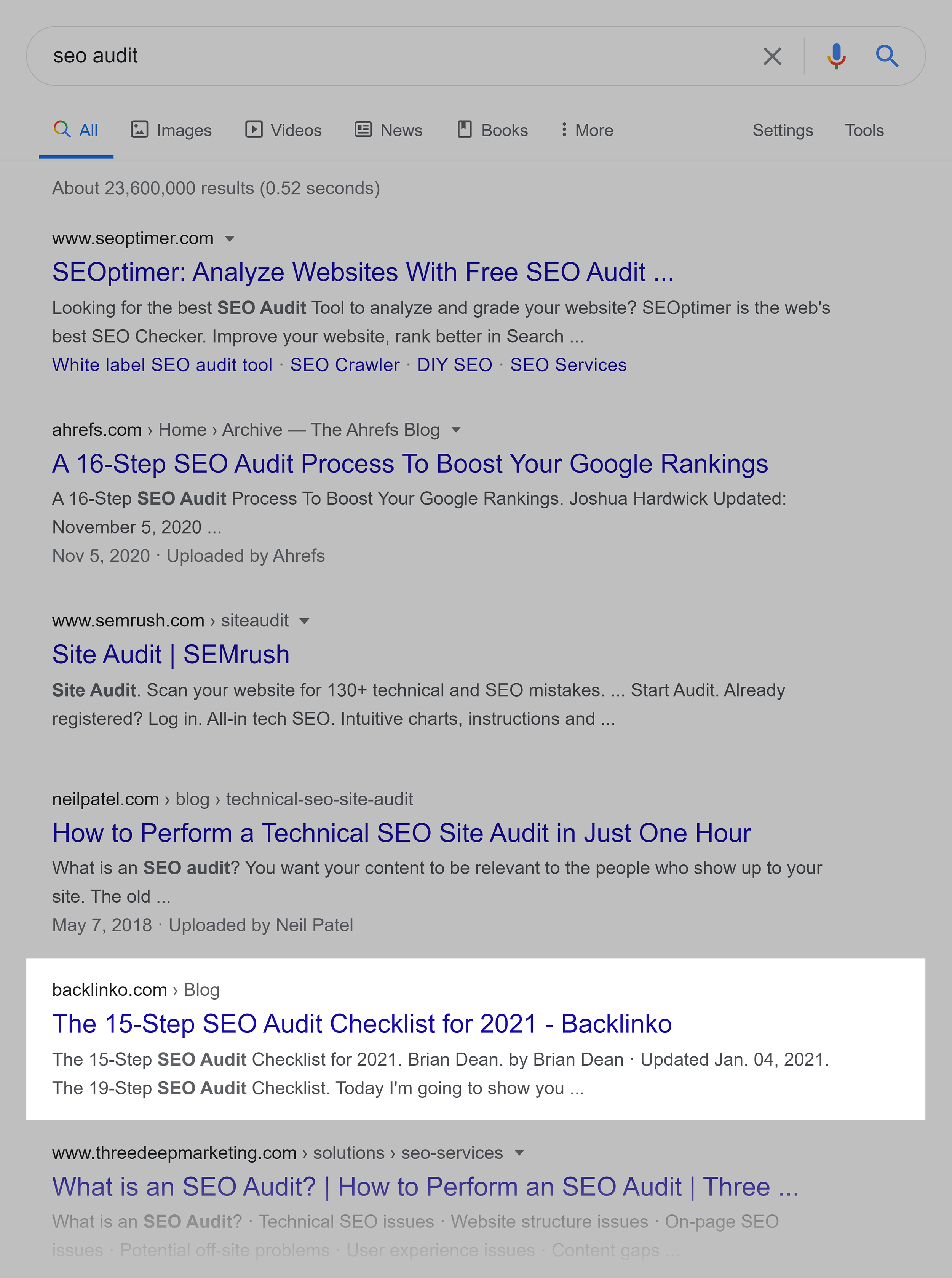
Do I sell software that helps with SEO audits? No.
Do I offer an search engine optimization audit service? Nope.
But I KNOW that folks that seek for “SEO Audit” are in my target demographic.
And my content is a method to get in front of this valuable group.
Step #5: Estimate Organic CTR
This step is all about figuring out what number of searchers actually click on the search results.
I’ll explain:
you might have seen charts like these before:
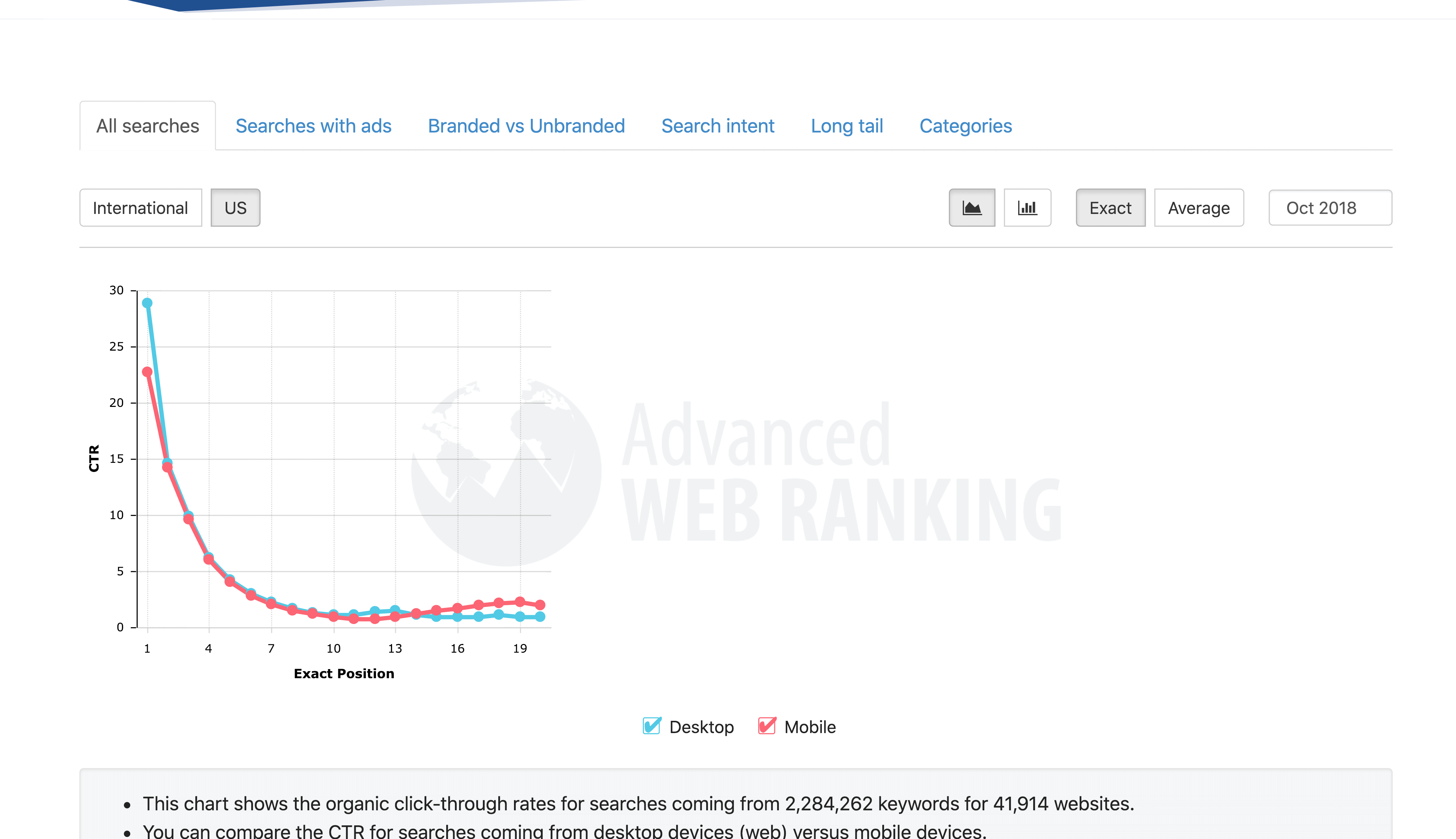
They estimate what number of clicks the #1 result gets, the #2 result gets, etc.
But what the ones charts DON’T inform you is that the hunt results are more crowded than ever.
for example, Google now uses millions of Featured Snippets to come up with an answer for your query… without needing to click on anything.
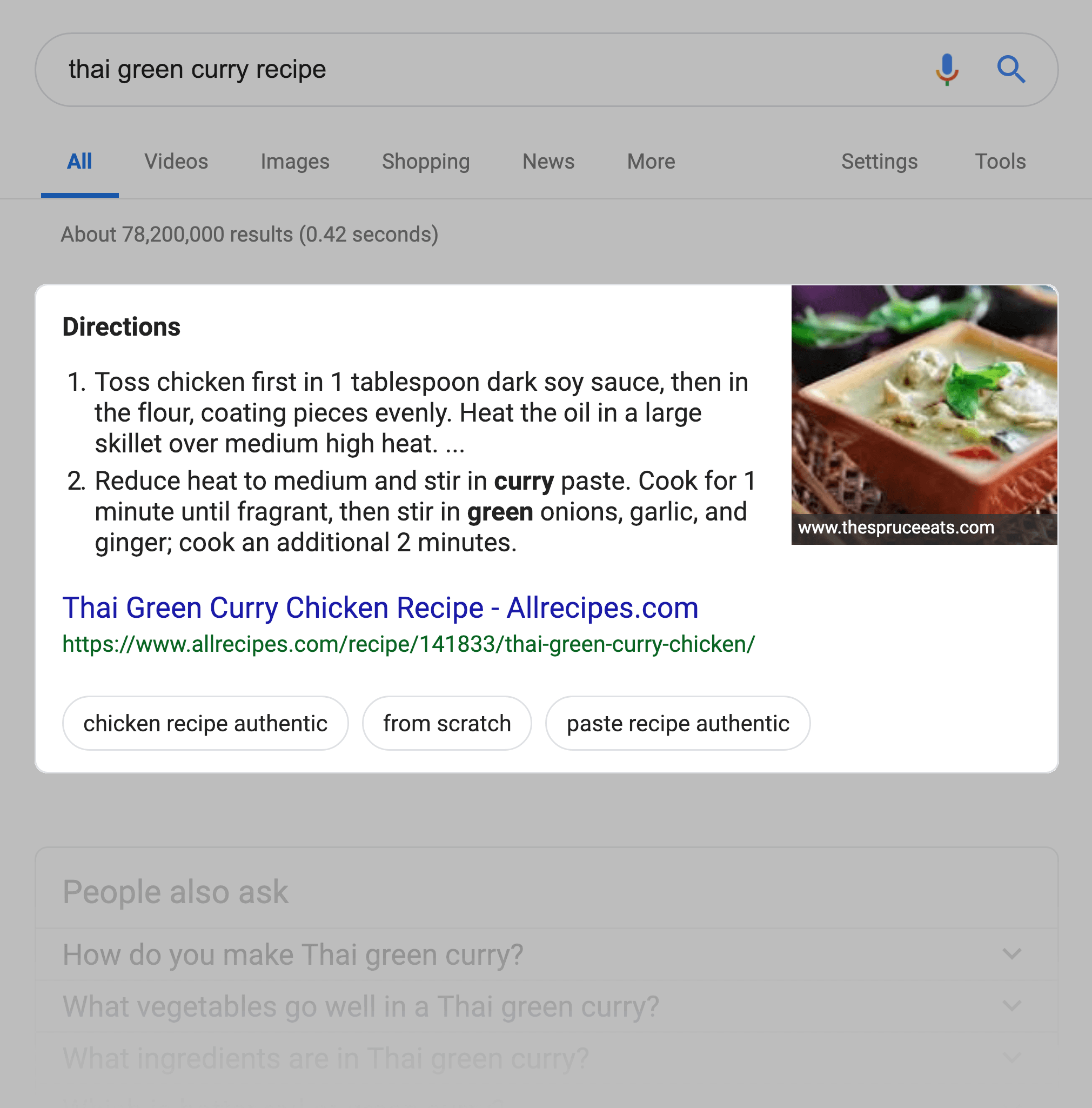
additionally they have more images, YouTube videos and other features that distract other folks from the organic results.
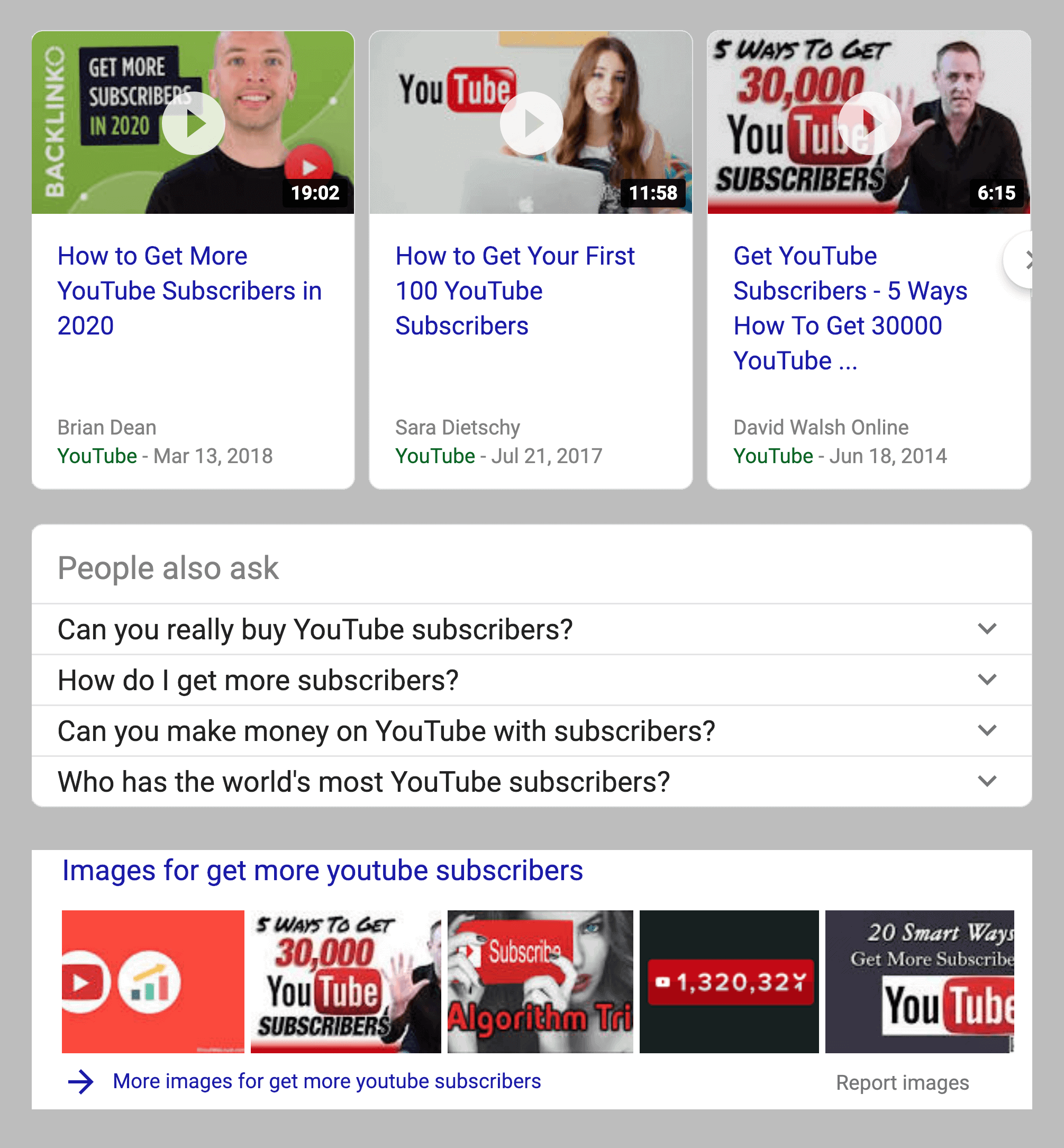
In other words:
Search volume is helpful. But if no one in fact clicks on the results, it doesn’t actually matter how many people search for that term.
That’s why you must get a rough estimate of organic CTR. Here’s how:
look at the search engines like google and yahoo
All it's a must to do here is take a look at Google’s first page results for your keyword.
If there’s numerous stuff on the first page, you realize that a good chunk of individuals won’t ever SEE the organic results… never mind click on it.
for example, take a look at the term “life insurance”.

There are 4 ads above the fold:

a big Featured Snippet:

And a “People also ask” box:
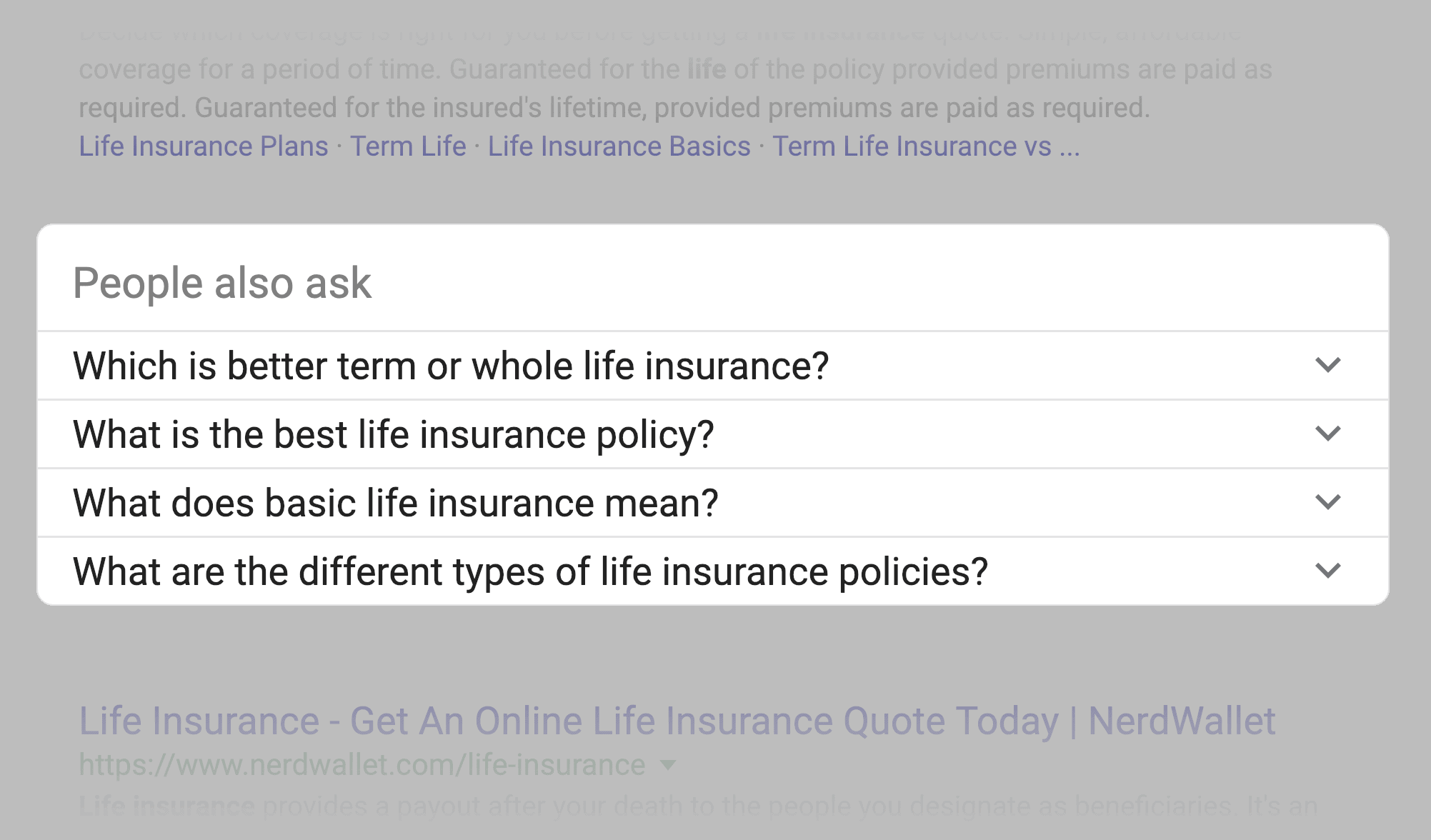
All before you get to the primary organic result!
That’s not to say that you desire to keep away from this keyword.
after all, it has a “Top of page bid” of $46.95:
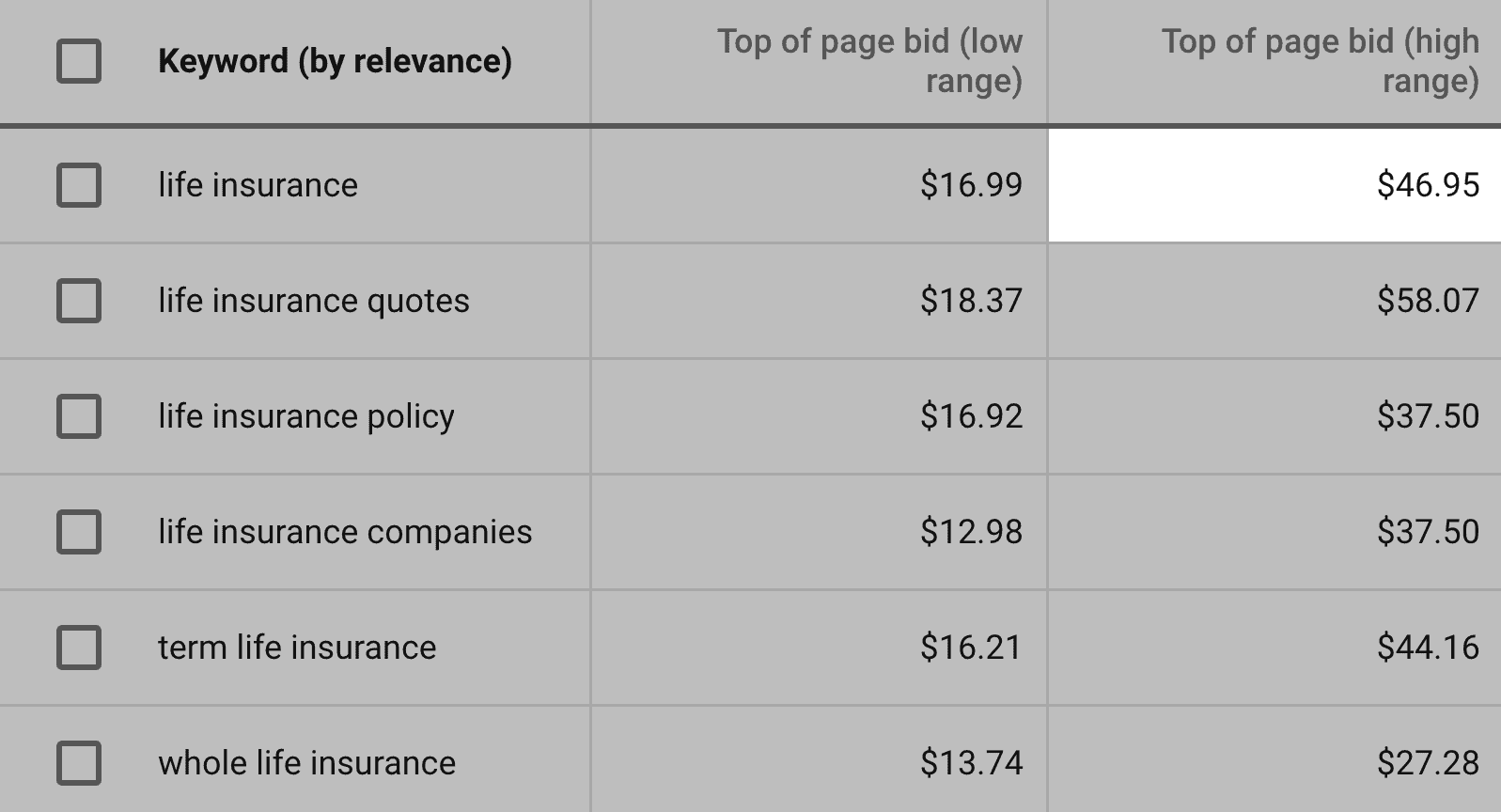
But it’s another thing to bear in mind as you select the best keywords from your list.
Ahrefs “Clicks”
Ahrefs uses Clickstream data to determine what number of searchers in fact click on something.
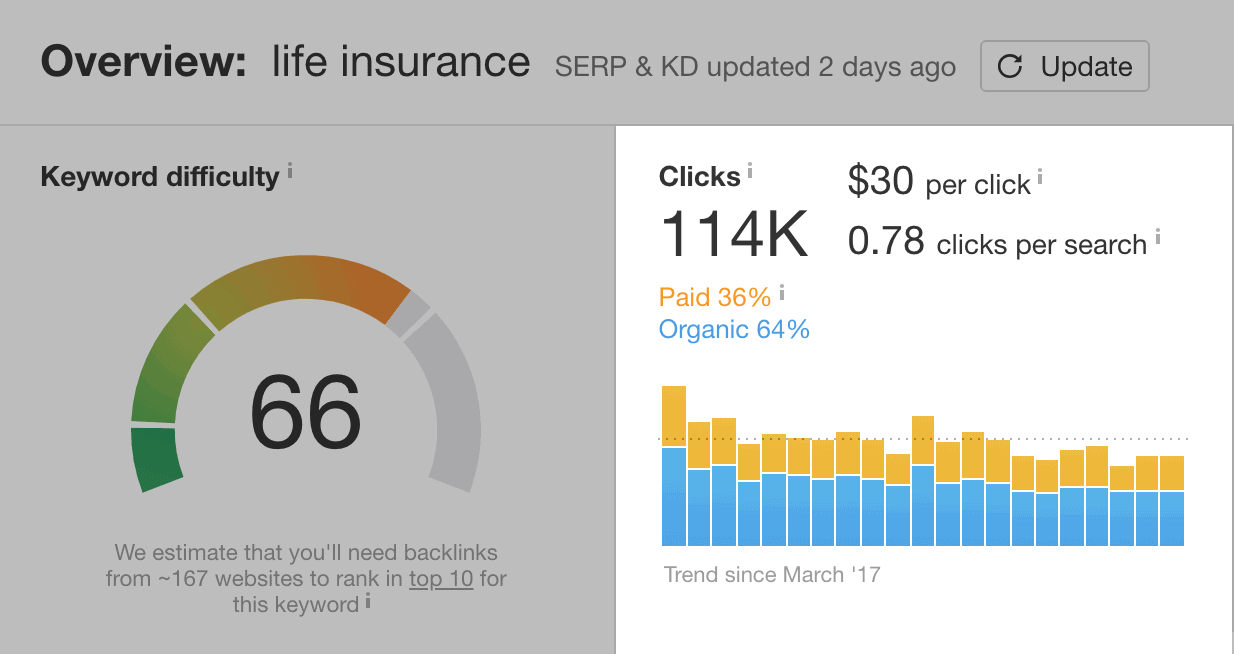
I still recommend looking at the quest results. But “Clicks” can help you filter out keywords that experience a super low CTR.
Step #6: make a choice Trending Keywords
Last up, it’s time to see whether the keywords for your list are trending up or down.
Obviously, you need to select keywords which might be growing in popularity.
That way, you may get MORE traffic from those terms through the years.
Google Trends is your friend here.
Set the date range to the last 5 years:
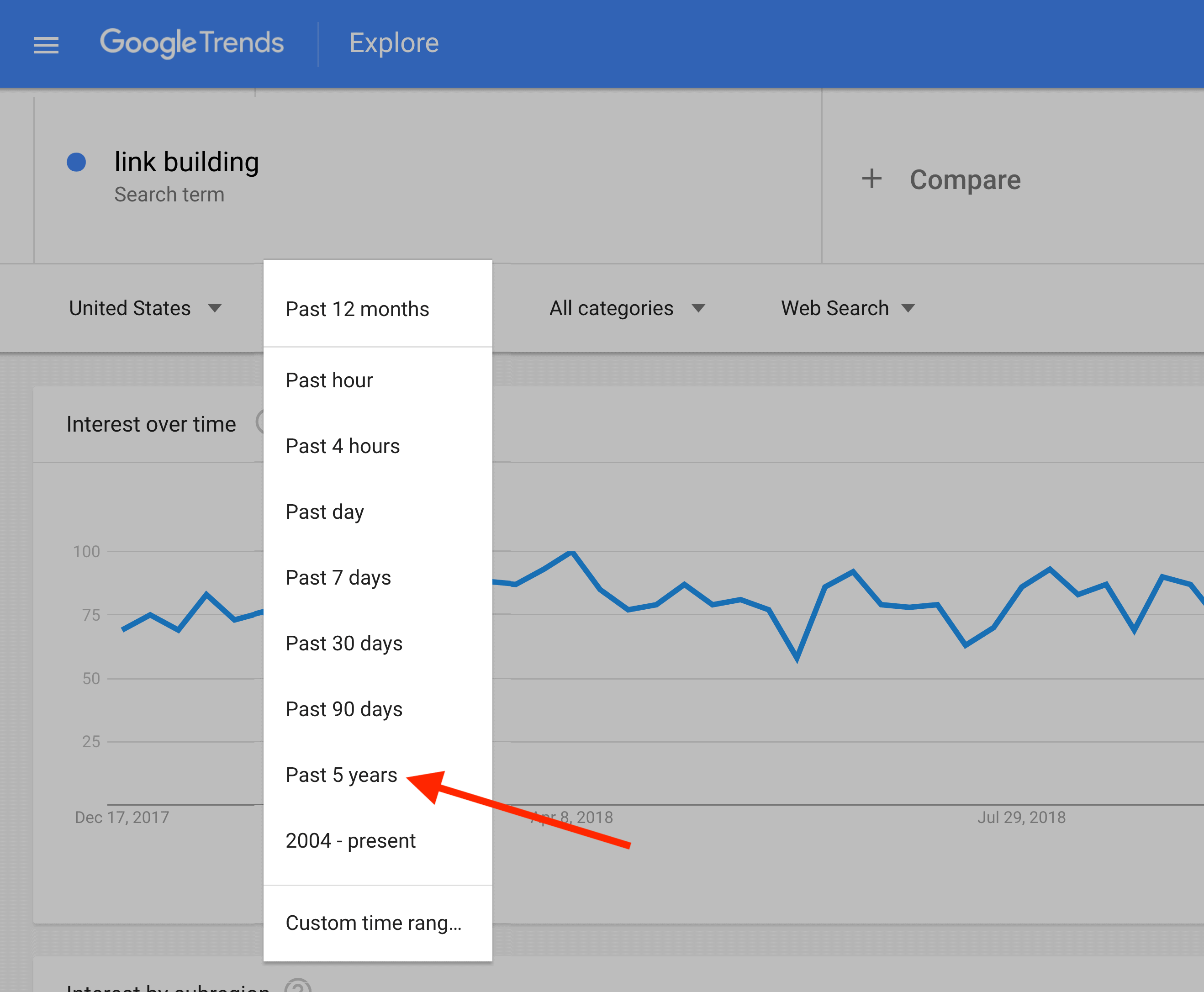
And take a look at the road.
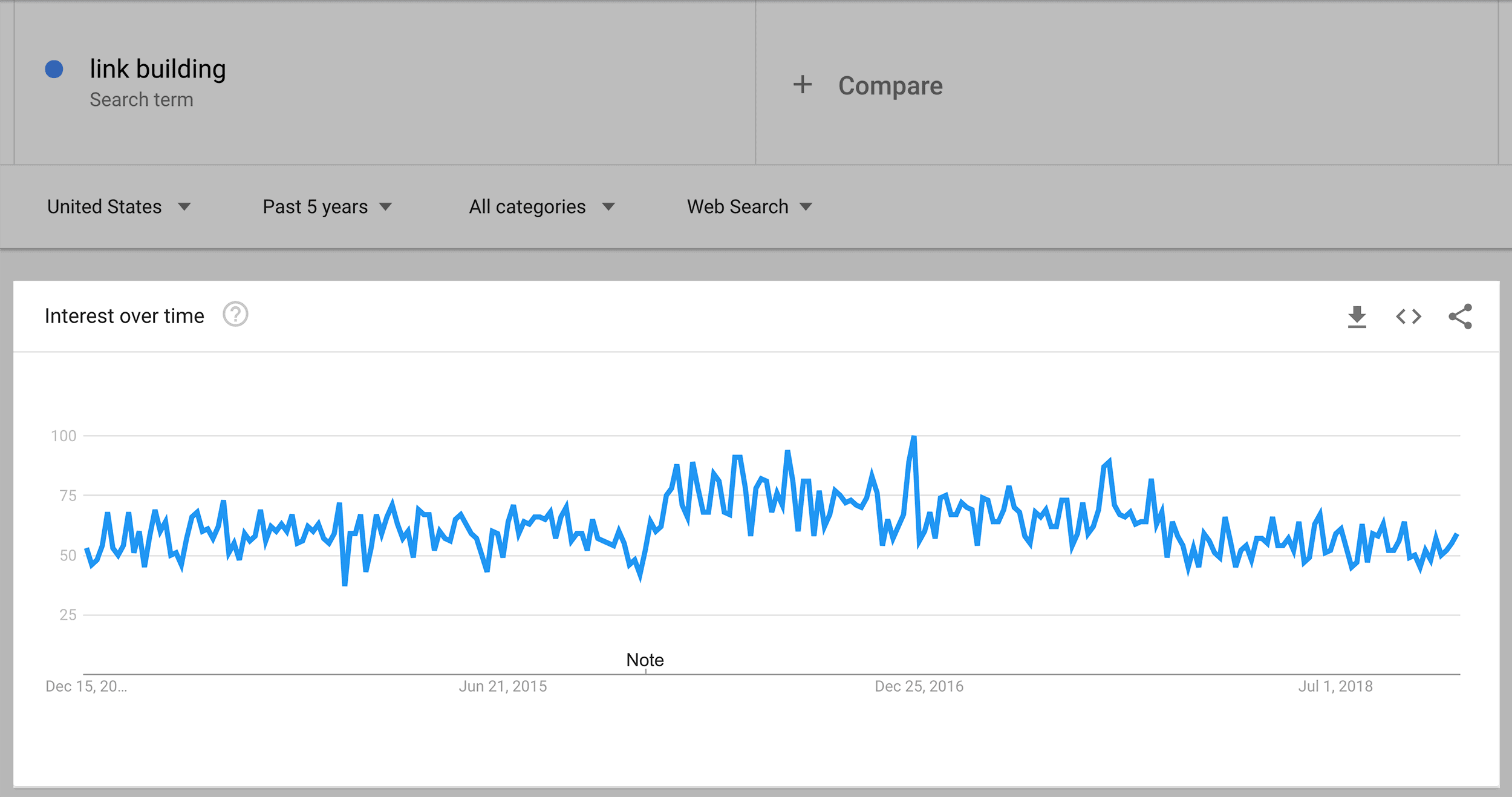
If a keyword’s popularity is up (or a minimum of stable), that’s a good sign.
If now not, it's essential go with a different keyword.
Learn More
Advanced Keyword Research Tutorial (5-Step Blueprint): A video tutorial that walks you through this exact process in-detail.
15 highest Keyword Research Tools for SEO: A list of my favorite keyword research tools at this time (in 2021).
how to define Long Tail Keywords: Detailed tutorial that show you strategies for finding low-competition, long tail keywords.


0 Nhận xét